
Visiting a Reindeer Farm in Rovaniemi: What You Need to Know


Visiting a reindeer farm in Rovaniemi is one of the most memorable experiences you can have in Finnish Lapland, and it’s not just for tourists ticking boxes. During our winter trip to Rovaniemi, Sean and I stayed at a small, family-run reindeer farm about 30 minutes outside the city.
Unlike the larger, more commercialized farms, this one didn’t have tour buses or crowds. Just us, a glass-walled cabin, and dozens of reindeer quietly moving through the snow.
We spent the night watching the herds wander past our cabin under the northern lights, and in the morning, we helped with the daily feeding. That meant climbing onto a toboggan hitched to the back of a snowmobile while reindeer chased us through the forest for their breakfast – definitely not your average morning routine!
Between stocking our wood stove to stay warm and getting followed to the outhouse by baby reindeer, it was one of the most immersive and unforgettable parts of our Finnish Lapland trip!
In this post, I’ll provide an honest review of our reindeer farm experience in Rovaniemi, how to choose between tourist-focused and traditional options, what to expect from different types of experiences, and tips for finding authentic, small-scale stays like ours.
Honest Review of Kentura Cabin
If you’re looking for a reindeer farm experience in Rovaniemi that feels truly immersive, personal, and far removed from anything touristy, Kentura Cabin is exactly that.
Sean and I stayed here during our winter trip to Finnish Lapland, and it was hands down one of the most memorable, peaceful, and unique places we’ve ever experienced. Located about 30 minutes outside of town, the property is surrounded by tall birch and pine trees and completely free from light pollution, noise, or crowds.
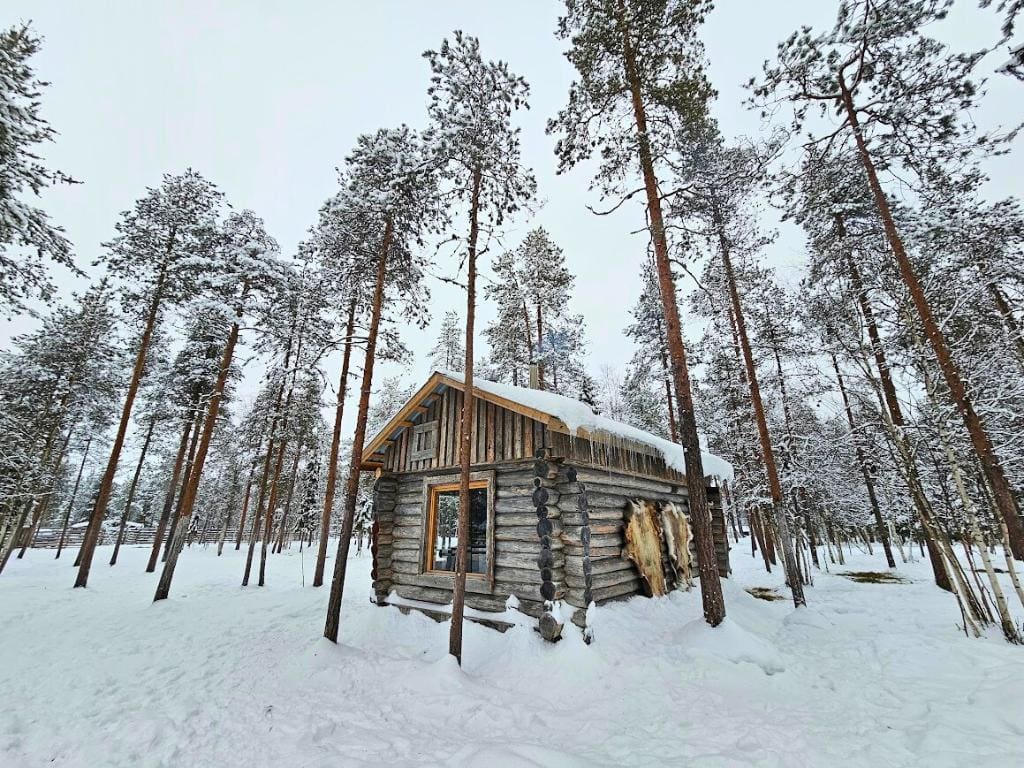
The cabin itself is beautifully minimal, with massive glass windows on two opposing sides, so you can lie in bed (which is spread with locally sourced reindeer hides) and watch the forest shift from daylight to moonlight.
We stayed warm by stocking our own wood stove throughout the night, which only added to the feeling of being part of the landscape, not just observing it. There’s no modern bathroom inside, but the wooden outhouse was clean, private, and didn’t smell at all – a rare feat in winter travel and genuinely not a problem.
The reindeer? Absolutely incredible. The farm owners manage three different herds across multiple farms, and the animals were clearly well cared for. They looked strong, healthy, and calm, and the entire area was tidy and spacious.
We were given small portions of reindeer moss, their natural diet, to feed them by hand without interfering with their usual routines. It felt respectful and thoughtful which is something you don’t always get in animal experiences that prioritize tourist entertainment over animal welfare.
One of the most unforgettable parts of our stay was helping with the morning feeding. We climbed onto a toboggan hooked up to a snowmobile while the reindeer chased behind us, eagerly waiting for us to toss out large portions of hay and grain on either side of us around the farms.
It was chaotic, hilarious, and completely unlike anything we’ve ever done. And through it all, the owners were there to guide us. Not with a rehearsed script, but with real conversation about the animals, the land, and their way of life.
They also took the time to explain the full cycle of reindeer farming in Lapland, including their humane practices for slaughtering and processing animals when the time comes.
It was clear they care deeply about minimizing stress, fear, and pain, ensuring the animals are handled with dignity and respect throughout their lives. It’s a side of reindeer farming that many travelers don’t hear about, but it’s an important part of the culture here, and we appreciated the honesty and openness.
Finally, this place is also an amazing spot for northern lights in Finland. Thanks to the cabin’s remote location and wide, open skies, we had the perfect vantage point for aurora viewing right from our bed. On a clear night, there’s nothing between you and the stars (or the aurora if you’re lucky!)
If you’re searching for an authentic, small-scale reindeer farm in Rovaniemi that offers privacy, education, and real connection, not just a sleigh ride and photo op. Kentura Cabin is everything you’re hoping for and more. We’d go back in a heartbeat!
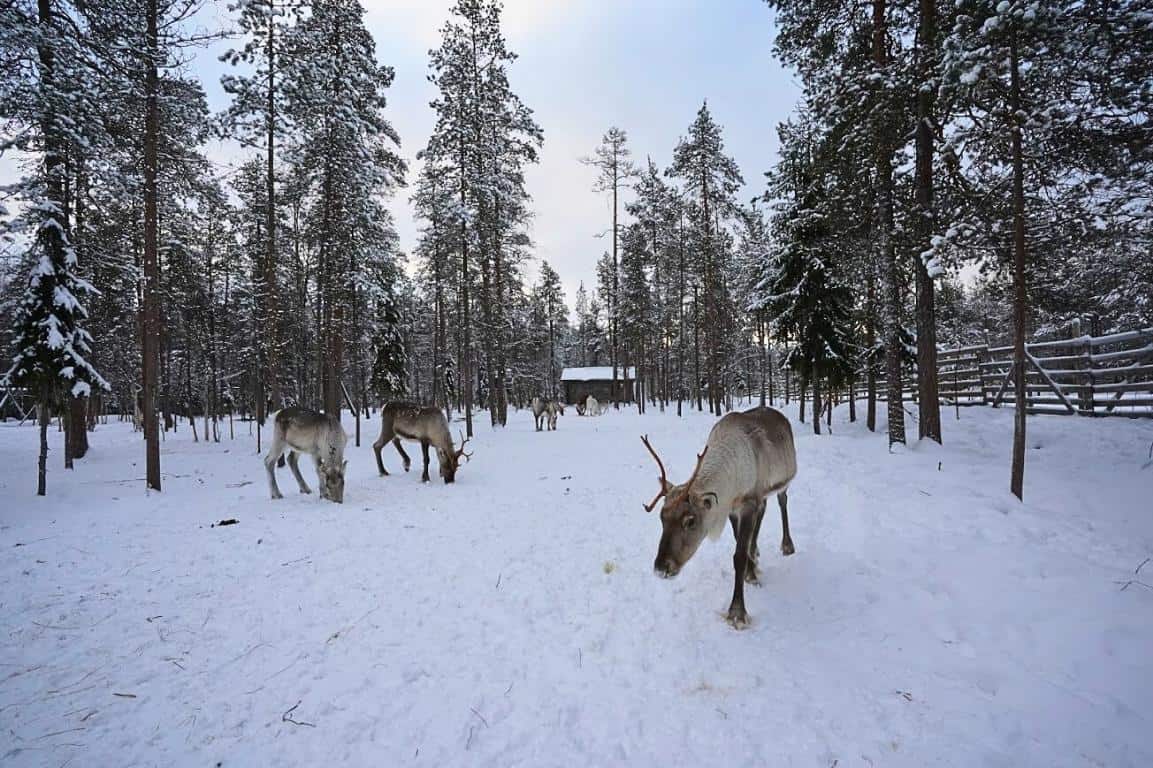
Tourist-Focused vs Traditional Reindeer Farms in Rovaniemi
There are two very different types of reindeer experiences in Rovaniemi and knowing the difference can make or break your trip. On one hand, there are the tourist-focused farms that cater to large groups, operate on tight schedules, and offer short, curated experiences like sleigh rides and photo opportunities.
On the other, there are traditional, family-run farms where reindeer herding is a way of life, not a staged attraction, and it’s easily one of the best things to do near Rovaniemi.
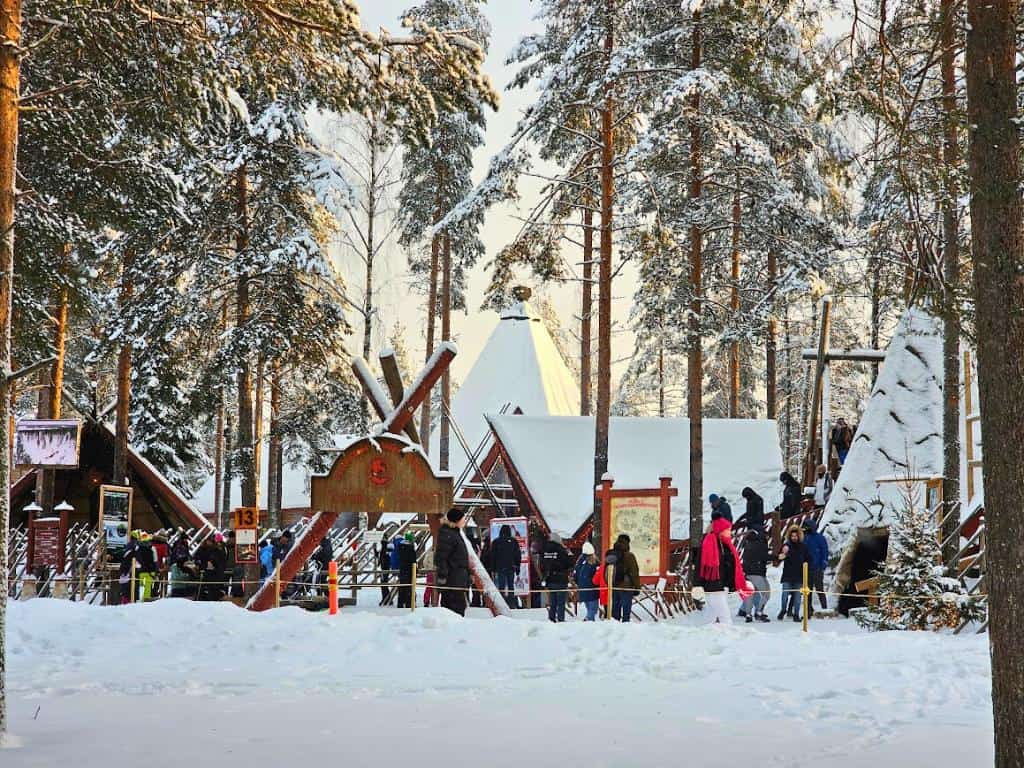
The tourist-oriented farms are easy to book and often located close to Rovaniemi’s main hotels or Santa Claus Village. Places like Apukka Resort and Santa’s Reindeer at Santa Claus Village are heavily commercialized and are designed around quick visits and large group turnover.
At farms like these, you’ll usually get a brief sleigh ride, the chance to feed a reindeer, and maybe a warm drink inside a kota (Sami hut). But, unfortunately from what we’ve seen, we’d hardly use the word ethical to describe these reindeer farms in Rovaniemi.
At these high-volume farms, reindeer are typically used in repetitive sleigh rides, running the same short loop over and over throughout the day. Animals may be working long hours without proper breaks, and their rest schedules aren’t always aligned with what’s best for their health.
In many cases, there’s little transparency around how the animals are trained, how often they’re rotated, or what kind of care they receive behind the scenes.
Plus, the size of their roaming grounds are a fraction of what they should be, and they’re frequently exposed to loud noise, crowded groups, and constant handling (conditions that are stressful and far from natural.)
And while staff may wear traditional Sámi clothing or provide scripted stories, many of these attractions are purely for show. They rarely offer real insight into the cultural or environmental importance of reindeer herding in Lapland. Not to mention, these resorts are going to slap an insane price tag on the experience!
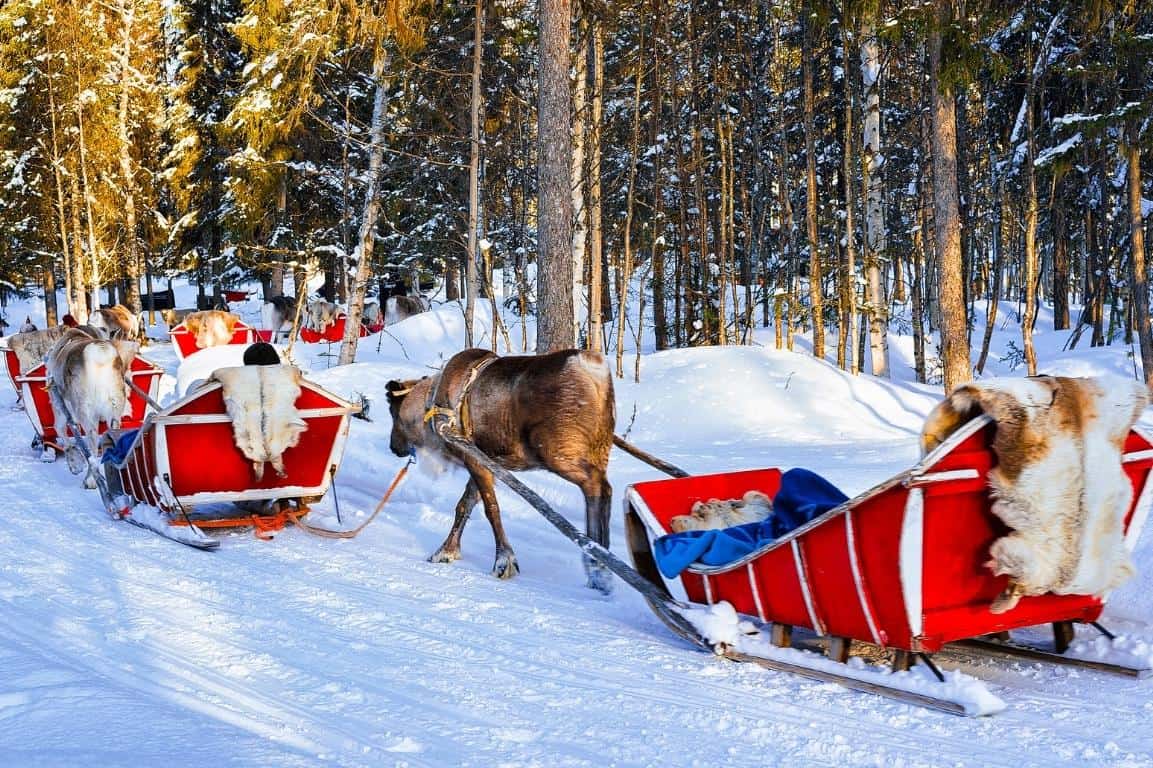
In contrast, traditional reindeer farms like Kentura focus on sustainability, education, and authenticity. These farms are typically located in remote areas with fewer visitors, and they often double as working farms where reindeer herding supports the family’s livelihood.
Experiences here are slower-paced and based around the animals’ actual routines, meaning you might feed them early in the morning, help with daily tasks, or simply watch the herd move through the forest in real time. There are no lines, no time slots, and no pressure to rush through.
One key difference is the level of cultural connection. At traditional farms, the owners often come from multi-generational herding families, and they’re eager to share what reindeer mean to the region and how herding practices have evolved.
You learn about the animals not just as photo subjects, but as part of a long-standing way of life tied to Finnish and Sámi traditions.
If you’re looking for an experience that’s ethical, personal, and deeply connected to the land and its people, a farm like Kentura offers something truly rare: the chance to learn, participate, and connect without overwhelming the animals or the people who care for them.
Tips for Choosing Your Rovaniemi Reindeer Farm Experience

Not all reindeer farms are the same, and it’s worth doing a little research before you book. While some places offer an unforgettable, ethical connection to Lapland’s traditions, others prioritize volume and photo ops over the welfare of the animals.
Here are a few things to look for and avoid when planning your visit:
1. Choose Small Group or Private Experiences
Fewer people means less stress on the animals and more time for you to ask questions and really connect with the environment. Farms that limit group size or offer private bookings are almost always more ethical and enjoyable.
2. Look for Multi-Generational or Family-Run Farms
If the farm has been passed down through generations or is actively run by a herding family, you’re more likely to get an experience rooted in tradition, not just tourism.
These farms often take better care of their animals and offer more insight into the culture and history of reindeer herding. Plus, they are used to people, but not in a bad way. They associate visitors with food and care, but still act like reindeer: jostling for space, protecting their young, and keeping their instincts intact.
The reindeer weren’t trained to be overly gentle or passive around humans and that’s exactly what made the experience feel authentic.
They behaved naturally, and we were given clear guidance on what signs to watch for so we could step back when needed. Our presence didn’t change their habits, which made it clear they were well cared for and still allowed to act like reindeer.
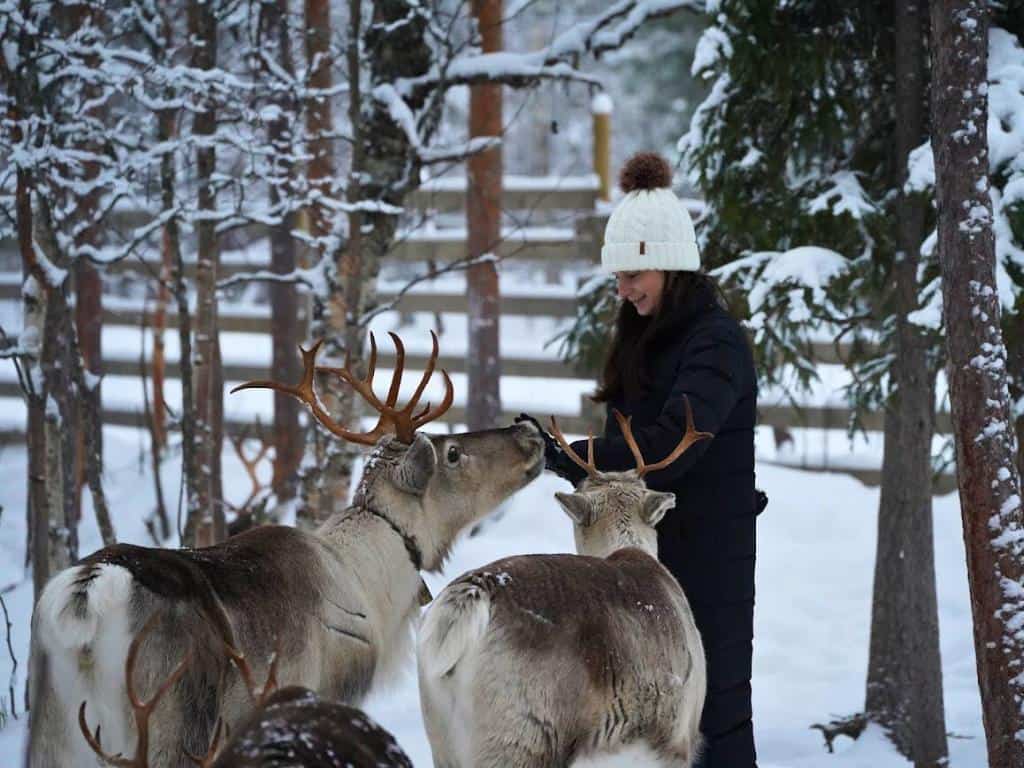
3. Ask About Hands-On Opportunities
Some of the best farms allow guests to observe or assist with feeding, herd movement, or daily routines (in a respectful, non-disruptive way).
If the experience is limited to riding in a sleigh and snapping a photo, it’s likely geared towards money and tourism, not meaningful experiences.
4. Review the Daily Structure for the Animals
Ethical farms will be transparent about how much work their reindeer do each day, what they eat, and how their rest and rotation are managed. Avoid any place where the animals seem overworked or treated like amusement park rides.
5. Read Between the Lines in Reviews
Reviews that only talk about how “fun” or “Instagram-worthy” the visit was, without mentioning the animals’ condition, are a red flag.
Pay close attention to reviews that mention how the animals were treated, not just how fun the sleigh ride was. Were the reindeer calm or skittish? Did visitors feel rushed? Did the hosts seem knowledgeable and respectful?
Real reviews will usually give you a good sense of whether the farm prioritizes quality or quantity.
6. Avoid “All-in-One” Day Tours with Reindeer Add-ons
If a reindeer visit is just one of many stops in a packed schedule (like Santa Claus Village + snowmobiles + Sami culture + reindeer all in one day), it’s usually a surface-level experience.
The animals are often treated like props, and you’ll likely get only a few minutes with them. They’re likely to be rushed, crowded, and designed for volume, not the welfare of the animals.
7. Ask About Food Provided for Guests to Feed
Some farms allow or encourage visitors to feed the reindeer snacks that are not part of their natural diet, just to encourage interaction.
This can cause digestive issues or behavioral problems, and is overall bad for both the animals and the people since people then assume they can feed wildlife whatever they want. Ethical farms will only provide appropriate food (like reindeer lichen/moss) and in limited amounts.
8. Look for Northern Lights or Overnight Options
Many of the best, least-commercialized farms are located farther out of town, away from light pollution and crowds. These places often offer overnight stays, which give you time to experience the environment at a slower pace, often with the bonus of northern lights views right from your doorstep.
The owners are much more likely to teach you how to appropriately act around the animals, as they did for us at Kentura.
We were told to not be too loud, to keep our distance, and if the reindeer were to stand up or back away from us when we moved, then we were making them uncomfortable and would have to give them space and move to a different area.
👉 If someone is telling you to get in a photo or to go right up to a reindeer that is directly facing you, backing away, stands up if they were laying down, or is putting its ears back and watching you from a side angle, then they don’t care about how the animal is feeling which is both dangerous for you and completely unethical for the animal.
9. Pay Attention to How the Hosts Talk About the Animals
Do the hosts refer to the reindeer by name? Do they talk about their personalities, routines, or care needs? Ethical hosts will see the animals as part of their family or heritage, not just as a means to entertain visitors.
10. Trust Farms That Don’t Promise “Entertainment”
If the farm’s website or listing emphasizes peace, learning, and respect over entertainment, that’s usually a good sign. The most rewarding reindeer experiences often involve quiet observation, thoughtful conversation, and a deeper appreciation for Arctic life, not staged shows.
But, if they guarantee photo opportunities, reindeer rides, reindeer safaris, and feedings, it’s best to steer clear!
FAQ
Are all reindeer farms in Rovaniemi the same?
Not at all! Some are traditional, family-run farms focused on sustainable herding and education.
Others are commercial attractions built for quick tourist visits and photo ops with the sole goal of earning a high paycheck. The difference impacts not just your experience, but also the wellbeing of the animals.
Can you stay overnight at a reindeer farm in Finland?
Yes! Some traditional farms, like Kentura Cabin, offer overnight stays in private cabins right on the property, and there are several others around the country that do the same.
These experiences are often more immersive, peaceful, and ideal if you want to see the reindeer in a natural setting without other tourists around.
Are reindeer sleigh rides ethical?
Honestly, not really, but it can also depend on how they’re done. Short, repetitive sleigh rides with little rest can be hard on the animals, especially if they’re pulling heavy loads all day.
More ethical experiences limit the number of rides, prioritize the animals’ health, and focus on observation and education rather than constant work.
👉 If the animals look tired or uninterested, don’t get on the sleigh. Notice in my photos above how the reindeer look energetic and excited? That’s how they should be!
What do reindeer eat and can I feed them?
Reindeer naturally eat lichen and moss, especially in winter. Ethical farms will provide this in small amounts for guests to offer by hand, without disrupting the animals’ routines. They also typically receive hay and grain in the winter when there’s no grass to graze.
It’s best to avoid any farm that offers random treats or allows unrestricted feeding by dozens of visitors throughout the day.
How cold does it get at the reindeer farms in Rovaniemi in winter?
Temperatures in Rovaniemi during winter can drop to -25°C (-13°F) or lower. When we visited in February, the temperatures actually stayed around 3°F (-16°C), so it was mighty cold when we were walking around the property.
It’s absolutely essential to dress in layers and bring proper thermal gear, otherwise, you won’t last very long outside!
Do reindeer farms operate year-round?
Most farms are open year-round, but the winter season (roughly November to April) is the most popular time for visitors.
Some farms close briefly in spring or fall during calving or transition periods, so it’s always best to check availability directly, especially if you’re hoping to book an overnight stay.
Do reindeer farms support Sámi culture?
Some do, especially farms owned by Sámi herders or families. However, many Rovaniemi farms are run by Finnish families with long-standing reindeer herding traditions.
That being said, there are also many commercialized farms who choose to sell their reindeer meat to the supermarkets for larger pay, which requires them to ship their reindeer in a truck and mass-slaughter them at a factory usually several hours from the farm. Do your best to avoid these locations.
If cultural heritage is a priority for you, look for tours or farms that explicitly mention Sámi ownership or guides.
What’s the best reindeer farm in Rovaniemi?
From our personal experience, Kentura Cabin takes the win!
That being said, there are many privately owned reindeer farms across Finland that can offer similar experiences, so just use the tips I provided above and you’ll likely find a great experience.
Where to see reindeer in Finland?
Reindeer are most commonly found in Finnish Lapland, the northernmost region of Finland. You can see them on reindeer farms, particularly around Rovaniemi, Inari, Saariselkä, and Luosto.
You can also see them in the wild grazing along roads or in the forest while driving in Lapland, although it’s not as common near towns. They’re semi-domesticated, so they often roam freely even outside of farms.
They’re also occasionally spotted in national parks and remote areas in places like Urho Kekkonen National Park or Pallas-Yllästunturi National Park when visitors are out backcountry hiking or snowshoeing!
For a respectful and educational experience that also doesn’t require a multi-day hike, visiting a traditional reindeer farm is the best choice.
A visit to a reindeer farm is one of the most meaningful ways to better understand the culture and landscape of northern Finland. These farms offer so much more than just sleigh rides. They provide insight into traditional livelihoods, seasonal routines, and the care that goes into maintaining healthy herds!
Whether you’re helping with the morning feeding, learning about the role reindeer play in Sámi and Finnish heritage, or simply watching the animals roam freely, it’s an experience that can add so much to your trip. Looking back, it’s easily our favorite experience that we’ve had across all of Scandinavia so far!
If you want something more personal and educational than a quick photo op, consider spending time at a traditional reindeer farm in Rovaniemi, Finland.
Up next, take a peek at other amazing places you can share with your trip to Rovaniemi like Tromsø and Abisko National Park!
