
Is Iceland Expensive? 2026 Iceland Budget Guide


Is Iceland expensive? How much money should I budget to travel Iceland?
Having traveled extensively across southeastern, southern, and southwestern Iceland with my husband (830 miles of driving to be exact), I’m going to provide you with exactly what it costs to visit Iceland and how you can travel here on a budget!
Because, yes, the country is undoubtedly quite expensive, but there are plenty of ways you can save money on your trip from grocery store meals to self-driving itineraries.
Iceland is pretty amazing, thanks to its magical northern lights shows, authentic displays of molten lava, active volcanoes, natural hot springs, fast-moving glaciers, and hundred-foot waterfalls.
I know planning a trip to Iceland can feel out of reach as soon as you start looking at the price tags, but in this post I’ve provided you everything you need to know on how to get there without breaking the bank!
We’ll start with the cost of food (one of the biggest challenges you’ll face budget-wise), then accommodations, transportation, and popular attractions.
I’ve also included a list of my personal travel tips for saving money while in Iceland, my very own Iceland budget calculator to guide your expenses, and provided answers to some very helpful questions to have before your trip!
Is Iceland Expensive to Visit?

Iceland is expensive to visit, sorry to disappoint. In fact, it consistently ranks in the top 5 most expensive countries in the world on practically every list you can find on the internet.
But, by following our travel tips and getting an idea of how much everything costs ahead of time, it can still be visited on somewhat of a budget!
Average Food Costs
Budget Options:

Sean and I spent $246.18 (I saved all of our receipts and added up the total cost of food in Iceland as well as at the Keflavik Airport) over the course of 5 days.
But, I’m going to be blatantly honest with you: we only ate at a fancy hotel bar once, and the rest of the time we were eating pre-made food from gas stations and supermarkets.
If you don’t mind keeping yourself alive with protein bars, cup o’ noodles, peanut butter and jelly sandwiches, and the occasional gas station smoothie, then you can do this too.
Here’s the breakdown for budget food items in Iceland.
➡ Cup o’ Noodles: $0.94-$2.40 USD (130-330 ISK)
➡ Small Jar of Peanut Butter: $3.49 (480 ISK)
➡ Starbucks Double Shot Espresso (canned from gas station): $3.19 (439 ISK)
➡ Green Smoothie (bottled from gas station): $3.84 (529 ISK)
➡ Milka Chocolate Bar: $3.23 (445 ISK)
➡ 4oz Packaged Salami or Pepperoni: $5.07 (698 ISK)
➡ 3oz Brie or Camembert Cheese Round: $5.28 (727 ISK)
➡ Loaf of Basic Bread: $3.29 (453 ISK)
➡ Large Bag of Doritos: $3.96 (545 ISK)
➡ (1) Pilsner Bottled Beer: $2.68 (369 ISK)
More Expensive Options:

If you have a little more room in your budget to splurge on some traditional Icelandic food, then these are some of the top items to try!
➡ Fish & Chips (a classic): $20 (2750 ISK)
➡ Acai Skyr Cup (my favorite!): $8.65 (1190 ISK)
➡ Fancy Lamb Dinner: $40+ (5500+ ISK)
➡ Arctic Char Dinner: $25 (3450 ISK)
↪️Pro Tip: I love considering myself an adventurous eater, but I try to be closely aware of sampling anything that could possibly affect dwindling populations.
Iceland, for example, continues to threaten the population of Greenland sharks, so if you see this on the menu, please think twice before ordering.
Average Accommodation Costs
Accommodations in Iceland can be shockingly expensive, particularly in the summer months, but we managed to find some fantastic budget-friendly options!
If you’re traveling with 2 people, it’s also important to note that a majority of accommodations charge per room rather than per person.

Airbnb
Airbnb is definitely the way to go if you want budget-friendly accommodations in Iceland. We found two cozy apartment rentals in Grundarfjörður (home of the iconic Kirkjufell Mountain) and Selfoss for $185 and $129, respectively.
Now, I know this is still expensive, but these rentals came equipped with large, comfortable beds, well-stocked kitchens that allowed us to cook food for ourselves, heat, and some gorgeous views.
Hostel
Hostels are typically only found in Reykjavik and a couple of other cities. But, if you don’t mind staying in a shared room with other travelers, this is definitely the most budget-friendly option!
You can find hostel dorm beds for as low as $46 per person, or private rooms starting at $80 most of the time.
Mid-Range Hotel
Mid-range, 2-3 star hotels, can be found for around $120-$200 per night, so if you’re traveling with more than one person, this can actually end up being a budget-friendly option.
Luxury Hotel
If luxury is what you’re after, then expect to pay anywhere from $250-$600+ per night at the top hotels in Iceland. However, keep an eye out for deals or off-season rates, as you may be able to snag a luxury stay at a lower cost.
We ended up scoring a 4-star hotel for $319 for the night, but we paid for it entirely with points! If you aren’t using travel credit cards to support your travels yet, well… you’re missing out on some serious cash.
Average Transportation Costs

Transportation costs can vary greatly depending on your preferred mode of travel. We chose to rent a car for our visit, but many people choose to stay at one hotel in Reykjavik or Vik and just do day trips from there.
There’s also the option of taking an all-inclusive tour which includes accommodations, transportation, and even food on some occasions, but this is by far the most expensive option.
Here are some rough estimates for the most popular transportation options in Iceland.
Car Rental
Renting a car is definitely the most convenient way to explore Iceland, but it can also be very expensive if you aren’t careful.
We rented an economy 4×4 Mitsubishi through Europcar (which was perfect for driving on parts of the Ring Road and the Golden Circle) and paid $319.12 for 5 days.
We booked this deal several months in advance of our travel dates which is why the rate was relatively low. When I looked at current rates about one week before our trip, rates were as high as $200 per day!
We loved the freedom of having our own car, but this would not have been an affordable option had we waited until the last minute to book.
Public Transportation
Buses and other modes of public transport are budget-friendly options for those not interested in driving themselves around an unfamiliar country.
There are several bus companies that offer tours and transportation to popular attractions and cities in Iceland, but these will surely be more expensive than the average bus with prices ranging from $60-$200+ per person per day.
Gas
Gas prices in Iceland are fairly high, so this should definitely be factored into your transportation costs. We spent about $200 in gas on a 5-day trip which included driving over 830 miles across the country.
↪️Pro Tip: If you do choose to rent a car, make sure to fill up at one of the larger gas stations like N1 or Olís.
Gas prices at smaller gas stations can be significantly higher, and most of the time smaller gas stations require the use of a pin number which isn’t always an option on travel credit cards.
Airfare

Roundtrip airfare to Iceland from the United States can range from $200-$1000+ depending on the season and airline. We paid $560 each for round-trip flights with Iceland Air in November from Boston, which is considered off-season in Iceland.
The summer months have been known to see airfare prices jump to $800+, and personally I’ve seen flights on Delta reach $1200 in the month of July from different countries around the world.
If you’re hoping to stay on a budget for your trip to Iceland, then visiting in the off-season can save you a ton of money!
Average Attraction Costs
Attractions can really rack up your budget in Iceland rather quickly, so my advice is to do your research ahead of time and choose which attractions mean the most to you.
I’m going to give you my personal opinion on all of the things to do below, but I’m also going to try to stay as unbiased as possible and simply give you all of the information to help guide your decisions.
Blue Lagoon
The Blue Lagoon has three different packages to choose from: the Comfort for $96-107, the Premium for $118-129, and the Signature for $143-154. These rates are per person.
In my opinion, the Comfort package is plenty. Most tourists are seeking that iconic photo of them relaxing in mirky, glacier blue water with a mud mask on their face – and you can do that with this package!
It comes with a complimentary drink and the silica mud mask treatment, plus the use of a towel. What else do you need really?
If you want more information on what the other packages offer, check out the Blue Lagoon package breakdown. They touch more on additional complimentary treatments, bathrobes, additional beverages, private changing suites, etc.
Sky Lagoon

Sean and I went to the Sky Lagoon instead of the Blue Lagoon primarily because the Blue Lagoon was temporarily closed due to volcanic activity in Grindavik, but on a future visit we plan to get to the Blue Lagoon, as well.
We spent 2 hours soaking in the Sky Lagoon and enjoyed the Seven-Step Ritual during our visit. You can choose between the Saman ($92) or the Sér package ($113), with the only difference being the Sér package provides you with a private changing room instead of a public one for $21 extra per person.
These prices do change, however, so keep an eye on how prices change depending on the season.
Ice Cave Tour
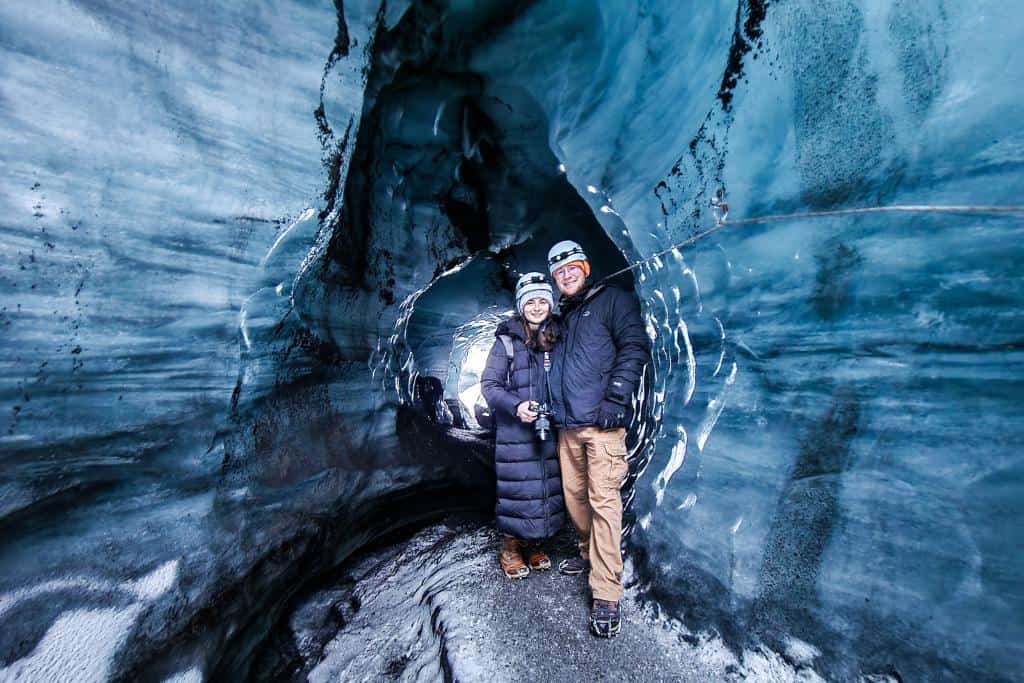
Ice cave tours are exceedingly popular in Iceland, with costs ranging from $170-$900 per person.
While these tours can be expensive, we aren’t lying when we say they offer a once-in-a-lifetime experience. Just make sure to book with a reputable company with good reviews, and be sure to pay attention during the safety briefing before entering the caves.
We went with Katlatrack out of Vik which is one of the only ice caves in Iceland that can be entered year-round, so this is a fantastic option when visiting in the summer months.
It was also quite affordable in comparison to other operators that we found, with the cost for the two of us being $402.71.
The company also provided all of the necessary transportation and gear including headlamps, crampons, and helmets, so this was well worth it in our opinion.
Northern Lights Tour

Now, here’s where I have mixed feelings when it comes to whether or not to hire a tour operator. If you’ll be visiting Iceland in the winter and are very comfortable driving yourself in a foreign country on icy, snow-covered roads, then you don’t need to pay for a tour.
BUT, if you don’t have experience driving in dangerous winter conditions like we do from our time living in Alaska during the winter, then you should absolutely be hiring a tour company to drive you around.
The northern lights can only be viewed in near complete darkness, so not only will you be traversing icy roads with which you are unfamiliar, but you’ll also be doing it in the dark.
Unfortunately, northern lights tours are expensive no matter what northern country you do them in and that’s why I have mixed feelings on this matter.
Tour companies don’t typically provide refunds if you don’t see the auroras because they have to be paid for their time and gas, despite whether or not Lady A (what Sean and I refer to the northern lights as) decides to show herself.
They have no control over the phenomenon making an appearance, so this is fair in our opinion.
It just really stinks if you pay for an expensive tour and don’t see anything. If you do decide to go on a tour, you’ll need to book it well in advance since they book up fast, but many of them provide free cancelation up until 24 hours before which is really great if the weather is looking cloudy (a big no-no for aurora viewing).
Here is our top choice for a northern lights tour in Iceland if you decide to do one!
Thingvellir National Park Visit

If you have your own car, then Thingvellir National Park is worth squeezing into your Iceland itinerary if it’s along the way. We found the park to be underwhelming with a complete lack of wildlife and the views to be less than spectacular, so if we returned we would skip it.
Some other tourists we met really enjoyed their visit, however, so you may find it more special than we did! If you visit on your own, then you’ll just need to pay for parking which is 750 ISK (about $5 USD).
Or, if you choose to go on a guided tour, then you can expect to pay around $80-$150 per person.
Lava Show

One of the most unique experiences you can have in Iceland is going to a Lava Show. This show is mesmerizing and a bit terrifying as you watch molten lava being poured out in front of you, with the handlers showcasing dazzling tricks with the scorching, viscous liquid.
The best part is these tours aren’t very expensive (depending on the tour you choose, of course), with some of them (like this one!) costing as low as $42 USD per person.
Even if you’re trying to save money on your trip to Iceland, these tours are worth budgeting for!
Jökulsárlón Glacier Lagoon Tour

Now, this tour is only necessary for you to pay for if you won’t be renting a car! If you will have your own vehicle for your trip, then there’s no need to hire a tour company since entrance to the glacier lagoon as well as the iconic Diamond Beach across the road is free.
However, if you’ll be basing your day trips out of Reykjavik, then this tour is well worth doing. Honestly, the glacier lagoon was probably one of our favorite parts of the trip and it definitely should not be skipped.
They are on the more expensive side, so you’ll want to keep this in mind if you’ve already gotten your hopes up for other tour options on this list, with average prices ranging between $120-$190 USD per person.
Average Trip to Iceland Cost for 2
If you are planning a trip to Iceland for two adults, it’s crucial to consider the various costs involved.
Generally speaking, a week-long trip to Iceland can be quite expensive, with an average budget ranging anywhere from $2,000 to $4,000 per person, inclusive of airfare, accommodations, food, transportation, and tours.
This figure can fluctuate based on the time of year, with peak tourist season (summer) being more expensive than the off-season (winter).
Remember that this is only an average, and how much you end up spending can significantly increase or decrease based on your travel style, the activities you choose to do, and your choice of accommodation and dining.
Sean and I ended up spending about $2,300 total for a 5-day trip, which is $1,150 per person including airfare. We challenged ourselves to stay on a tight budget, and this was truly the best we could do with only eating out once and the total for that meal coming to $63 USD since we ate bar food.
If you aren’t planning to be this vigilant of your spending, then you can expect to pay in the $1,500-$4,000 range per person for a one-week Iceland trip.
Tips for Visiting Iceland on a Budget

Iceland is expensive, there’s no denying that. But, we discovered some great ways to save money on our trip and have shared them with you below! They may seem obvious, but it’s easy to forget or not take into consideration when planning your trip.
1. Buy Food at the Local Supermarkets (our favorites were Krónan and Bónus)
When it comes to budgeting for a trip to Iceland, one of the most significant expenses you’ll likely face is food. Eating out at restaurants in Iceland can be almost nausea-inducingly expensive, with a basic meal of soup or a sandwich costing between 20-30 USD per person.
However, there are ways to save money on food by purchasing groceries and cooking your meals instead.
So, when Sean and I arrive in Iceland, our first stop is always the local market. We pick up a loaf of bread, peanut butter and jelly (if you have a peanut allergy, consider bringing your own sunflower butter since this can be hard to find in Iceland), cup of noodles, and some meat and cheese for the day.
I know, I know – we’re not exactly on a health-kick when we travel. BUT, I will often pick up green smoothies at the market so I can at least include some nutrients in my day’s caloric intake.
By doing this, Sean and I only spent $246.18 on food during a 5-day period for two people, which is much more reasonable than the typical average of between $100-$150 USD per day per person that most people spend when they eat out!
2. Book your Rental Car Far in Advance
As soon as you know your trip dates, start researching and booking your rental car. The prices of rental cars in Iceland can vary greatly depending on the season and availability, and typically skyrocket as travel dates get closer.
You can almost always reserve your car for free without even putting down a credit card and free cancelation often applies right up until your selected pick-up time.
There’s really no risk if you have the parameters to work with, so the first thing you should do once you have an idea of where and when you’ll be traveling is book your car.
3. Be Flexible with Your Travel Dates

If you have some flexibility with your travel dates, try to avoid traveling during peak season (June-August) when prices for flights, accommodations, and activities are at their highest.
Consider visiting during shoulder season like we did (we really enjoyed Iceland in November) when we were able to enjoy discounted accommodation rates and see the northern lights!
4. Take Advantage of Free Activities
While there are many amazing paid attractions in Iceland, there are also plenty of free activities and sights to see!
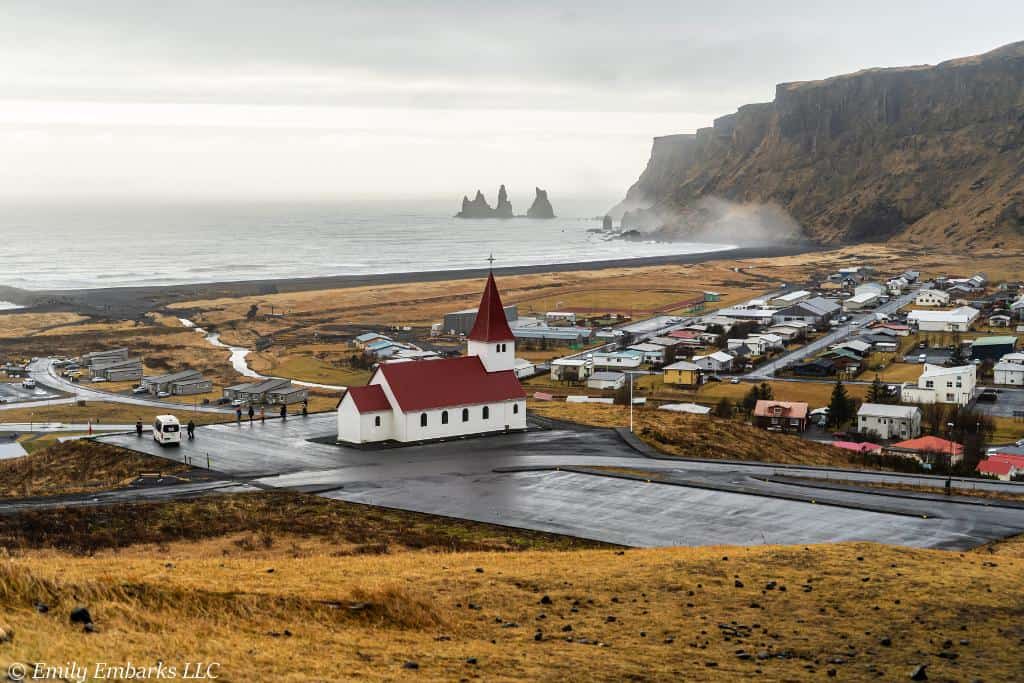
Some of our favorites were visiting the black sand beaches in Vík, hiking up the hill behind the Vík i Myrdal Church for amazing views, exploring waterfalls along Route 1 in South Iceland, and simply taking in the beautiful landscapes while driving.
These activities cost us nothing but provided some of our most memorable experiences.
5. Pack Smart to Save on Essentials
It might sound basic, but packing the right gear can save you a lot of money.
Remember, Iceland’s weather can be unpredictable, often changing multiple times in a single day. By packing waterproof and warm clothing, you avoid purchasing expensive gear once you’re there – especially if you’ll be visiting in the shoulder season when rain is nearly guaranteed!
We brought along with us specific essentials like travel snacks, a refillable water bottle (Iceland’s tap water is some of the purest in the world), and travel-sized toiletries.
Every penny we saved on these essentials counted towards experiencing more of what Iceland has to offer like our ice cave tour, fun souvenirs to bring home, a bigger rental car, etc.
Iceland Budget Calculator
I’ve created this Iceland budget calculator to help you get an idea of how much you should budget for your trip to Iceland.
Don’t forget, you’ll need to add the cost of your flights and your rental car (if you book one) once you know the prices for your specific travel dates.
FAQ
Is Iceland Expensive for Tourists?
Yes, Iceland can be expensive for tourists. Given the high cost of importing goods and services and the cost of living, it’s no surprise that accommodations, dining, and activities can be quite pricey for visitors.
The average daily cost for tourists is estimated to be around 41,000 ISK (approximately $300 USD), which includes accommodation, meals, transportation, and activities.
This can increase significantly if you opt for luxury accommodations or participate in high-cost activities such as guided tours or excursions.
However, with careful planning and budgeting, as well as taking advantage of free activities and smart packing strategies as we’ve outlined above, you can certainly make your trip more affordable.
Is Iceland Expensive for Americans?
Due to the currency conversion, Iceland is expensive for Americans using the U.S. Dollar.
This is especially true for activities, accommodations, and food. However, the exchange rate can fluctuate, so it’s worth keeping an eye on before your trip.
Is Iceland Expensive to Eat Out?

Eating out in Iceland is a pricey affair.
As I mentioned earlier, even a simple meal can set you back quite a bit. Let’s say you want to try some of Iceland’s famous seafood in a restaurant, you could find yourself paying upwards of $40-$50 USD per meal.
Breakfast usually starts around $15 minimum, while it’s not abnormal spend upwards of $35-50 each for lunch and dinner. Add in the cost of an alcoholic drink for about $15+ each, and you’re looking at $130 per person per day for 3 meals and 1 alcoholic beverage.
But, if you’re a foodie who loves to experience local cuisine, it might just be worth that occasional splurge.
On the flipside, you can make your travel budget stretch further by cooking your own meals and discovering the delicious and diverse offerings at local supermarkets, as we did.
So while it may be expensive, it is definitely manageable if you plan ahead and make thoughtful choices!
How Much is a Coke in Iceland?
The price of a Coke in Iceland can fluctuate, but on average, expect to pay around 300-400 ISK (about $2.19-$2.92 USD) for a small bottle in a supermarket.
In restaurants, it can be even more expensive, often upwards of 500 ISK (close to $4 USD). Remember, these are just averages and prices can vary depending on the location and the store or restaurant.
How Much Does a Meal Cost in Iceland?
The cost of a meal in Iceland varies widely depending on whether you are cooking at home, grabbing fast food, or dining in a restaurant.
If you’re cooking at home, you can expect to spend about 1000 ISK (around $7 USD) per meal. Fast food, such as a burger and fries, could cost anywhere from 1800 to 2000 ISK (about $11-$14 USD).
Dining out at a mid-range restaurant, however, could set you back anywhere from 2500 to 5000 ISK (approximately $18-$36 USD) per meal. High-end restaurants will cost significantly more.
Remember, these are approximations and actual costs will vary based on your specific choices and the current exchange rate.
Is Iceland Expensive to Live?

Yes, Iceland is indeed expensive to live in. The high cost of living in Iceland is primarily attributed to the island nation’s remoteness, which necessitates the import of a broad range of goods.
Furthermore, the cost of housing in Iceland, especially in Reykjavik city, is considerably high. While wages and salaries in Iceland are relatively high by international standards, they don’t necessarily offset the elevated costs of goods and services.
That being said, Iceland offers a high quality of life, an excellent education system, and a robust healthcare system, which may make the higher living costs worthwhile for some.
Is Iceland Cheaper than the US?
Overall, Iceland is generally more expensive than the U.S. This is due to various factors such as high import duties, the cost of services, and the relatively higher standard of living.
While some goods may be priced similarly or even lower in Iceland compared to the US, many daily necessities, dining, accommodations, and especially activities often come at a higher cost.
However, the difference in cost depends greatly on the specific comparison, the current exchange rate, and the location in the U.S. you’re comparing it to.
How Much is a Trip to Iceland for a Week?
Typically, for a budget traveler cooking their own meals, staying in low-cost accommodations or camping, and limiting paid activities, you could expect to spend around 80,000 to 100,000 ISK (approximately $600-$730 USD) for a week, excluding flights.
Mid-range travelers, staying in hotels, eating out occasionally, and participating in a few paid activities, could expect to spend about 200,000 to 300,000 ISK (approximately $1500-$2200 USD).
For a luxury trip, with high-end accommodations, dining, and activities, you could be looking at 500,000 ISK (around $3650 USD) or more for a week.
Other Helpful Iceland Resources
Do They Speak English in Iceland? 12 Icelandic Phrases
Is Iceland Safe? Global Peace Index & 10+ Safety Tips
While Iceland may be expensive, it is still possible to plan and budget a trip to this stunning country that won’t break the bank. By keeping an eye out for deals, planning ahead, and making savvy choices, you can have an unforgettable experience in Iceland without blowing your entire travel budget.
