
Backpacking Europe Routes for 2 Weeks: Routes & Tips


Whether you are on a limited budget, have a limited amount of time for traveling, or merely want to pack a lot of sights into a short vacation, these ultimate backpacking Europe routes for 2 weeks are the perfect way to fit a lot in on your European getaway!
Backpacking is my personal favorite way of traveling across Europe. With the help of the Eurail, small airlines, and budget-friendly hotels, it’s easier than ever to see multiple countries in a short amount of time.
In this post, you’ll find everything you’ll need to know if you’re considering a backpacking trip across Europe. From the best time to visit Europe all the way to my insider packing tips and more, you can be confident before jetting off to the airport.
2-Week Backpacking Europe Itineraries

The following backpacking routes have been designed to last around two weeks, give or take a couple of days. Each route follows a different section of Europe such as North, South, East, and my favorite, West!
These are just a few of the limitless possibilities available to you when you go abroad. If you want to combine different regions into one trip, be sure to use Google Maps to map out your itinerary before booking anything to prevent an inefficient journey.
For example:
Paris ➡️ Barcelona ➡️ Berlin ➡️ Lisbon = inefficient
Lisbon ➡️ Barcelona ➡️ Paris ➡️ Berlin = efficient
2 Week Backpacking Europe Route #1:
Ireland, Scotland, and the United Kingdom

These three countries are a match made in heaven for backpackers. While they are typically more expensive than many European countries (London being one of the most expensive places in the world), backpacking makes them affordable possible to visit for thousands of people every year!
This ultimate two-week guide will bring you across the best sights and scenic outlooks in these beautiful countries dotted with sheep, rolling hills, and endless beauty!
Day 1: Arrive into Cork International Airport in Ireland
Even though it will be tempting to fly into Dublin, especially if you are coming from the eastern side of Ireland, do your best to fly into Cork Airport. The flights will likely be more expensive, but this will save you a lot of money in train travel and will keep your trip route efficient.
This will be one of the only times I recommend renting a car! Ireland is one of the best road trip destinations in Europe, so it’s only fitting that you share in that experience.
Once you arrive in Cork, check into your accommodation and settle in. Then, spend the night out on the town in Cork – it’s full of lively pubs and colorful townhouses along the Lee River.
Day 2: Cobh, Killarney, Dingle Peninsula
After a hearty full Irish breakfast, drive yourself down to Cobh (about a 25-minute drive). Walk the streets, especially the one known as the Deck of Cards over on Bandon Hill!
This will give you the best view of the city and the iconic Cobh Cathedral. If you have the time on your way to Killarney, you can try squeezing in Blarney Castle, but keep in mind that this will add about 25 more minutes of driving to your day.
Spend some time walking through Killarney’s vibrant town before moving on to the beautiful rolling hills of the Dingle Peninsula. As one of the most highly photographed regions in Ireland, this is one of my personal favorite spots in the country.
Day 3: Limerick, Cliffs of Moher, Doolin, Galway
After a morning coffee overlooking the beautiful Dingle Peninsula, make your way up to Limerick for a quick poke around the old town before heading directly for the world-famous Cliffs of Moher!
If you do decide to fly into Dublin on your trip, check out these 9 Best Rated Cliffs of Moher Tours from Dublin or book the top-rated tour below. I also found the 9 BEST Tours from Galway to Cliffs of Moher!
After you’ve walked the edge of these mighty Irish cliffs, head up to the charming fishing village of Doolin. If you have the time and want to explore Galway, it’s a good place to see the wonderful Trad on the Prom show, but if not, ending your day in Doolin is just as good.
Once you make your way to Galway (either on Day 3 or early on Day 4), drop off the rental car and take the train from Galway to Dublin.
Day 4: Dublin
After exploring Dublin for a day (be sure to stay for at least one night so you can experience the lively pubs and live music that happens every night), take a train to Sligo. Spend some time exploring the town’s unique position on the northwest coastline.
Looking to spend a little more time in Dublin? Check out Our Perfect 2 Days in Dublin Itinerary

Day 5: Sligo
County Sligo is home to some of Ireland’s most beautiful cliffs, and the country’s tallest, the Slieve League Cliffs! You’ll also be close to the town of Donegal which produces Ireland’s famous Donegal tweed.
These both make for fantastic day trips from Sligo and can be easily reached via guided tour or a rental car. On your return to Sligo, hop on an evening train up to Belfast, United Kingdom!
Day 6: Giant’s Causeway and Londonderry, United Kingdom
Once you have had some time to explore the infamous town of Belfast located in Northern Ireland, it’s time to hop on a train up to the Giant’s Causeway.
This impressive nature reserve is home to more than 40,000 basalt columns that plunge out of the Atlantic Ocean. It is one of the most remarkable UNESCO World Heritage Sites in Europe and is one of the best places to visit in Europe!
After you have had time to explore this infamous site, hop on a train back to Belfast. If you have some extra time for sightseeing, consider including a train ride to Londonderry before your return to Belfast.
Day 7: Morning flight to Glasgow
Take an early morning flight to Glasgow and explore the town for the day and evening. This port city is known for its excellent shopping and its Victorian architecture.
Day 8: Morning train to Edinburgh
Onto Edinburgh! Spend the day and evening wandering the medieval Scottish capital. The city is best explored on foot, though renting bikes is quite fun, as well!
Day 9: Morning train to Inverness
Located in the Scottish Highlands, Inverness is a great place to visit in Scotland. Take some time to explore the Inverness Cathedral, the Inverness Castle, and enjoy some live music at the famous Hootananny Pub.

Day 10: Loch Ness and Scottish Highlands
While these gothic towns are full of exciting character, ancient tales, and stunning beauty, I recommend spending the majority of your day exploring deep in the Scottish Highlands.
There are plenty of guided day tours that will bring you to the Jacobite Steam train (now famous due to its involvement in the Harry Potter films) and many of the movie’s famous filming locations.
Loch Ness is also wonderful for talking with the locals about the ancient tale of the famed Loch Ness monster!
Day 11: Morning train to Aberdeen
After you’ve explored Inverness, take an early morning train to Aberdeen. This is where you’ll find stunning beauty overlooking the Scottish coastline as well as many great museums, castles, cathedrals, and parks to explore.
Spend the day wandering the small town before taking an evening train down to the Scottish capital of Edinburgh!
Day 12: Morning flight to Manchester
Manchester is one of England’s largest cities and is full of character and charm. From endless art galleries and museums to the home of the infamous Manchester football (soccer in America) games, there’s a lot you can fill your day in Manchester with!

Day 13: Morning train to Birmingham
Birmingham makes for a great pitstop on your way down to Bristol and Bath. Spend some time wandering through the museums, visit the famous Cadbury World home to Cadbury chocolates, and visit the 17th-century Aston Hall mansion.
Day 14: Bristol, Bath, and the Cotswolds
Make your way from Birmingham down to Bristol via an early morning train and take in the sights from the Clifton Suspension Bridge before making your way to Bath.
As the name suggests, Bath is famous for its thermal spas and ancient Roman baths! Take some time to soak in the Thermae Bath Spa and The Roman Baths before checking out Bath Abbey, Pulteney Bridge, and the Royal Crescent!
Day 15: Early train to London

Since many people typically spend at least two days in London, I suggest taking an early train from Bath or Bristol then taking an evening flight home the following day.
This will provide you with enough time to see all of the major sites and attractions as well as take some time to relax and reminisce on your wonderful 2 week backpacking route across Europe!
Day 16: Fly home from London
Enjoy your last day exploring some museums or just sit back and people watch with some local food before your flight home. As backpacking Europe routes for 2 weeks go, this is by far one of the most scenic and exciting options in my opinion!
2 Week Backpacking Europe Route #2:
France, Spain, and Portugal

France, Spain, and Portugal are easily one of the most classic combinations for European itineraries out there. With similar climates, outstanding wine vineyards, vast mountain ranges, and endless beautiful beaches, this trio is easily one of the best backpacking Europe routes for 2 weeks.
This itinerary can be completed in either direction, either beginning or ending in Portugal, but don’t begin it in Spain or you’ll end up backtracking a very long distance!
Please keep in mind that with only two weeks, there will be a lot that you won’t get to see. The itinerary below sums up some of the best places to see in Portugal, Spain, France, but is in no way all-inclusive.
Other fantastic day trips would include the mountains of the Andorra Region and the Caminito del Rey hike in Spain, as well as Normandy, Mont St Michel, Colmar, and the wine regions of France plus many more. Do some research on what you want to see and do most before booking your trip to prevent disappointment in the long run!
Want some more Spain travel inspiration? Check out my list of 33 Wonderfully Unique Places to Visit in Spain!
Day 1: Arrive in Porto
Porto and the Porto Valley are known for their exceptional wineries and limitless vineyards along the Douro River. You can spend your day strolling the city’s ancient streets or taking a wine tour along the river. With dozens of museums, art galleries, and exquisite lookouts to be had in Porto, a day here is sure to start your trip off perfectly!
Spend the night here before moving on to the next small towns on this Portugal itinerary – Coimbra and Obidos!
Day 2: Óbidos and Coimbra
Home to dozens of ancient ruins, Romanesque churches, sky-high cathedrals, and medieval cobblestone streets, Coimbra and Óbidos should be included on any backpacking itinerary through Portugal.
While Coimbra is home to a stunning riverside village covered with vibrant buildings and Roman ruins, Óbidos is known for its beautiful white-washed walls, red terracotta rooftops, and a medieval castle!
Coimbra can easily be reached via train whereas Óbidos may require several bus transfers, a car rental, or a guided tour.
Day 3: Arrive in Lisbon

Lisbon is one of my favorite cities in Europe with its red clay roofs, exceptional cuisine, and hospitable people. While this itinerary is going to include nearly two days in Lisbon, if you would rather explore outside of the capital for longer then check out my ultimate one day in Lisbon itinerary!
Lisbon is home to museums galore with over 60 in the city alone! Take your time wandering the city streets, eating Pastel de Natas, and enjoying the sights from the several lookouts that have been strategically placed around the city.
Don’t forget to take a ride on the infamous Lisbon trolley!
Day 4: Sintra, Cascais, and Estoril
The region surrounding the capital of Lisbon is known for the beautiful Cascais beaches, the castles of Sintra, and even the popular bucket list destination of the Cabo da Roca – the westernmost point in Europe!
In these regions, you’ll find some of the country’s best flora and fauna, rugged coastlines, medieval castles, and gorgeous white sand beaches. Not to mention, charming towns and hospitable locals!

Day 5: Algarve Region
The Algarves are known for their popular towns of Lagos and Faro home to some of the most beautiful beaches in Europe! Visitors can enjoy swimming at the popular Marinha Beach and Praia do Camilo, boating through the Ponta da Piedade, and kayaking through the infamous Benagil Caves.
If you’re looking to soak up some serious sun on any one of these backpacking Europe routes for 2 weeks, a trip to the Algarves should be in your future!
Day 6: Seville, Spain,
The Portugal piece of this backpacking itinerary ends in Faro as you take a train over the border into Seville, Spain!
Easily recognized for the Plaza de España, Catedral de Sevilla, and the Royal Alcázar of Seville, there is no end to the beautiful ancient architecture to be explored here.
Day 7: Fly from Seville to Valencia, Spain

While Valencia is reachable via train (about 9 hours from Seville), it is far more efficient to fly.
In just over an hour, you’ll land on the beautiful shores of Valencia where you’ll find the famous L’Oceanogràfic aquarium, a 15th-century mercantile, and the 14th-century Torres de Serranos which offers unbeatable views overlooking the sweeping Spanish coastline.
While it could also save you time to fly from Valencia from Madrid, the train is much more scenic and slightly more affordable (most of the time – check prices prior to booking one or the other!)
Day 8: Madrid onto Barcelona
I suggest splitting your day between Madrid and Barcelona since you can see most of the best parts of them in a few hours, hence my one day in Barcelona itinerary, but if this feels too rushed then consider including an extra day on your itinerary or skipping one of the towns on the itinerary.
Barcelona is home to a unique network of cobblestone streets, medieval architecture, stunning churches, and an array of different neighborhoods each boasting its own unique personality! Take some time at the Arc de Triomf, in the Gothic Quarter, and on Las Ramblas.
Day 9: Girona and Cadaqués
From Barcelona, hop on a train and head up to the Costa Brava region of Spain. With endless beaches, white-washed villages, and decadent seafood dishes, you really could spend two weeks here alone.
But, since you’ll be short on time, be sure to take a walk on the Platja Gran in Cadaqués and photograph the colorful buildings lining the Ter River in Girona!

Day 10: Marseille, France
Time to depart Spain and make your way into France! The first stop on this France itinerary will be in Marseille; a charming, yet sophisticated, fishing town known for its high-end restaurants and shopping as well as beautiful scenery around every corner.
Spend some time swimming (or kite surfing!) in the turquoise blue waters of the French Riviera, strolling through the Old Port, exploring the Château d’If, or even hiking through the Massif des Calanques National Park!
Day 11: Nice
Known for its iconic coastal promenade, the Promenade des Anglais, Nice is a beach bum’s dream paradise!
Visitors can also enjoy climbing to the hilltop Castle of Nice to take in exceptional views of the French Riviera or wandering the streets of the bustling Cours Saleya which overflows with flowers and goods.
This will be your last full day on the French Riviera before moving on to the French Alps! If you enjoy wine tours, be sure to check out some of my favorite wine tours in France or simply book the top-rated tour below!
Day 12: Fly Nice to Lyon – train to Annecy

Take an early morning flight, if possible, to Lyon where you’ll board directly on a train to Annecy. While Lyon is a great spot to poke around and has its own unique sights and activities, you’ll likely have more fun in the alpine towns of Annecy and Chamonix.
After a one-hour flight from Nice to Lyon and a 2-hour train ride from Lyon to Annecy, you’ll be ready for some authentic cheese fondue and raclette!
Once you have eaten your weight in French dairy goodness, it’s time to explore Annecy’s Old Town – in particular, the Palais de I’Île. This iconic former prison is the centerpiece of the town. From here, wander over the romantic Puente de los Amores and rent paddleboards or pedal boats to explore Lake Annecy!
Day 13: Chamonix
The average bus ride from Annecy to Chamonix is only about an hour and 35 minutes, whereas the train will take you about 2 hours – and boy, is it worth it!
The French Alps are world-renowned for their cheese, wine, and, of course – mountain sports! Here, a small village is nestled between ranges of skyscraping snow-capped peaks and the infamous Chamonix Mont Blanc.
Year-round, you can enjoy hiking, paragliding, mountain trekking, rock climbing, white water rafting, rappelling, and more. In the winters, the alpine village transforms into the ultimate ski resort boasting incredible trails from both the Aiguille du Midi and Le Brevent cable cars.
Though Chamonix is a small town, try to include it on any of these western backpacking Europe routes for 2 weeks! It is a cultural hub, quaint mountainside village, and adrenaline sport central all in one!
Day 14: Paris

The moment you have probably anticipated your entire life is here – you’re going to Paris! Full of romance, high-end shopping, and Michelin-star cuisine, the City of Lights is on most people’s bucket lists and it would be a shame not to include it in your itinerary if you’ve never visited.
Of course, there is the Arc de Triomphe, Notre Dame, Les Champs-Élysées, the Sacré-Cœur, and the Eiffel Tower, but any Paris itinerary should also include cruising along the Seine River, exploring a few of the dozens of museums like Le Louvre or the Musée d’Orsay!
Day 15: Depart from Paris to go Home
Enjoy a croissant and a cup of coffee in the Luxembourg Gardens or the Tuileries Garden before heading off to the train station or airport to return home.
While any one of these itineraries for backpacking Europe routes for 2 weeks would be amazing, this one, in particular, is a true gem. Full of fairytale castles, medieval villages, and adrenaline-pumping activities, this trio is one of my personal favorite backpacking combinations in all of Europe!
If you run out of time and only have the option between Barcelona or Lisbon, check out this guide: Barcelona vs Lisbon: The Ultimate City Comparison. Likewise goes for Paris and Amsterdam!
2 Week Backpacking Europe Route #3:
Italy and Croatia

When it comes to choosing between any of these backpacking Europe routes for 2 weeks, this one is the ultimate getaway! From romantic gondola rides in Venice to strolling the Old Town and ancient ruins of Dubrovnik, visitors are exposed to a range of budget to luxury experiences that are unparalleled across Europe.
While you could easily spend a couple of months in these destinations, the next two weeks will bring you across some of the best places to see in these beautiful countries!
Day 1: Arrive in Naples
Italy has several international airports and while it will usually be cheaper to fly directly into Rome or Milan, flying into Naples will prevent you from having to retrace your steps with this itinerary.
Try to land early in the morning so you have a full day in Naples before moving on to Pompei and the Amalfi Coast! Naples is the birthplace of pizza, so go grab yourself a classic margherita and enjoy the view.
Day 2: Pompeii and the Amalfi Coast

Pompeii is overflowing with ruins from the ancient city including the House of the Faun and a former Roman amphitheater which was once home to gladiator fights and grand events!
The ancient city is also home to the active volcano of Mount Vesuvius and endless archaeological ruins.
Nearby Pompeii sits the popular Amalfi Coastline – home to beautiful the beautiful seaside village of Positano which is known for its vibrant, mountainside homes overlooking the sea!
This is by far one of the most scenic coastlines in Italy and should be included on any Italian itinerary. If you have extra time and are planning on skipping Bari, take a boat ride around Capri!
Day 3: Train to Bari
If you are a lover of the sea and beautiful seaside villages, then jump on a train to Bari. Known as the capital of Puglia, this village is home to hundreds of white-washed homes that have been situated around the inlets of the beautiful, turquoise blue Adriatic Sea!
Have fun exploring the iconic Old Town before checking out the 13th-century castle and the Piazza Mercantile!
Including Bari on your itinerary will add about 7 hours of traveling time versus if you were to just take a train directly to Rome, but since it is so beautiful we believe it is worth the journey. If you would prefer to have more time in Rome, then skip Bari.
Day 4: Train to Rome
Whether you are departing Naples or Bari won’t change the fact that I suggest taking an early train to Rome, if possible.
We have only included one day in Rome since much of the sights and attractions are quite touristy and there are far better ones outside of Italy’s capital.
For this reason, we suggest getting an early start so you have at least one full day there to see the Colosseum, Trevi Fountain, Sistine Chapel, and the Vatican Museums.
But, if you really love museums and could spend an entire day exploring the Colosseum alone, then I suggest adding an extra day in Rome to your itinerary.
Day 5: Florence and Pisa
Day 5 of this backpacking Europe route for 2 weeks will take you on a train to Florence and Pisa!
Home to the iconic Cathedral of Santa Maria del Fiore, Michelangelo’s David statue, the Ponte Vecchio, and the Piazzale Michelangelo, Florence is one of the most visited places in Europe!
A day trip to the leaning tower of Pisa is simple with either a guided tour from Florence or a self-guided tour via train! Since this journey from Florence to Pisa is only about 50 minutes, we highly suggest including it in your trip.

Day 6: Cinque Terre
In just 3 hours from Florence, a train ride will bring you to the quintessential Italian Riviera: Cinque Terre! While there are a plentiful amount of sights to be seen in this gorgeous seaside region, the best part of visiting Cinque Terre is to walk through the 5 villages that make up this hillside town.
Each one has its own distinct characteristics and is home to stunning scenery as far as the eye can see. The villages are known as Vernazza, Manarola, Monterosso, Corniglia, and Riomaggiore and are all connected by dirt and cobblestone walkways.
Be sure to buy a bottle of freshly made limoncello while walking around! There are also plenty of great hiking trails between the villages with sweeping views of the coastline so if you like to hike, Cinque Terre is the perfect place to visit!
Day 7: Milan
Another 3-hour train ride from Cinque Terre will bring you into the heart of downtown Milan.
Home to the infamous Duomo di Milano, the iconic cathedral that dominates this vast city, as well as the Sforzesco Castle and several museums and art galleries, Milan deserves one full day on this backpacking Europe route for 2 weeks!
Milan is also famous for its gelato, so be sure to try a scoop (or two or three) during your visit!
Day 8: Venice
To get to Venice, you can hop on another 3-hour train ride or a quick 55 minute fly from Milan. Though flying will typically be more expensive (not always – compare pricing before booking!), since you’ll only have one day in Venice I suggest flying to get the most out of your day.
Over your 24 hours in Venice, be sure to stroll through St. Mark’s Square, take a gondola ride down the Grand Canal, walk over the iconic Bridge of Sighs, and if you get the chance, visit Saint Mark’s Basilica during sunset!
Even if you don’t get to all of these things, Venice is a breathtaking city to visit nevertheless. So, consider taking a day to people watch and eat as much gelato, pasta, and pizza as you can on your last day in Italy!
Day 9: Fly Venice to Zagreb, Croatia
You’re off to Croatia! Spend the morning in Venice visiting any last-minute sights before jetting off to the airport. Croatia’s capital is home to an impressive Neo-gothic 12th-century cathedral, the Ban Josip Jelačić Square, and a plethora of museums making it the perfect pitstop on your backpacking Europe route for 2 weeks!
Day 10: Plitvice Lakes National Park
Just over two hours southwest of the capital sits the breathtaking Plitvice Lakes National Park!
Home to dozens of tranquil blue waterfalls perfect for swimming, endless dense forestry with hiking trails galore, and long wooden bridges for crossing over crystal clear lakes, this is a nature enthusiast’s paradise!
Spend the day jumping into the deep, cool toppling waterfalls and enjoy a picnic on a mossy rock. To reach the national park without a car, hop on a bus in the center of town for a carefree journey!

Day 11: Zadar
Once you have swum until your heart’s content, jump back on the bus and get off at the nearest town with connections to Zadar.
This stunning seaside city is home to turquoise blue waters, endless white-sand beaches, the iconic People’s Square full of shopping, as well as the central Five Wells Square.
Day 12: Split
From Zadar, there is a 3-hour bus journey down to Split. Technically, you could spend days here just exploring all of the ancient ruins and hundreds of charming corners of this terracotta-roofed city, but since you’ll be a little short on time, here’s what you should do.
First, take some time to explore the Diocletian’s Palace (it once housed a Roman emperor!) and then move on to the 4th-century Saint Domnius Cathedral.
Once you have taken some time to explore the Old Town and stick your feet in the crystal clear waters on one of the dozens of beaches, then it’s time to start strolling Riva; a lively boardwalk overflowing with great bars and restaurants serving up authentic dishes focused on using fresh, local ingredients!
Day 13: Dubrovnik
The last leg of your backpacking journey includes a 4.5-hour train ride down to the stunning coastal town of Dubrovnik. As one of the most popular destinations in the entire country, I suggest spending at least a day and a half here, but more would be best if you can swing it!
The city is easily recognized across the globe for the El hotel Stari Grad – Casco Viejo; the medieval Old Town full of history and culture.
Along your Dubrovnik travels, you can stop in to see the Lovrijenac fortress which offers panoramic views of the city and sweeping coastline, as well as the Rector’s Palace, the Dubrovnik Cable Car, the Franciscan Church and Monastery, and the city’s main street of Stradun which offers great shops, bars, and restaurants!
There are endless possibilities for visiting Dubrovnik, so be sure to leave some of your energy for the end of your trip. We’ve left one of the best destinations for last!
Day 14: Dubrovnik and Return Home
As far as backpacking Europe routes for 2 weeks go, this one is a popular favorite! Finish up this incredible journey in Dubrovnik before returning home.
Be sure to stuff as much local seafood in before leaving, as possible – I suggest trying the Black Risotto (made with squid ink)!
2 Week Backpacking Europe Route #4:
Switzerland, Austria, and Czech Republic

There couldn’t be a more luxurious combination for a backpacking trip! From the iconic pedestrian bridge in Lucerne to the halls of Mozart in Salzburg and the Old Town Square of Prague, there is hardly a more sophisticated route across Europe!
Since you’ll be following this 2 week backpacking Europe route from west to east, it’s best to start in Geneva. However, you can also start the itinerary in Czechia, but don’t begin in Austria as you’ll need to backtrack across the country twice if you do.
✅ Keep in mind that if you’re trying to backpack Europe on a budget, this itinerary may be difficult for you. Switzerland and Austria are quite expensive, so be sure to do some research on accommodations and train travel prices before setting your trip in stone!
Day 1: Geneva
Geneva is gratifying to say the least! From its exotic location on Lake Geneva (also known as Lac Léman) to its dramatic water fountain and a plethora of sophisticated museums, Geneva is a backpackers heaven!
Owing to the region’s vast beauty and endless, beautiful streets, backpackers can enjoy roaming here for days one end. However, even the hostels here can sometimes start around 80 USD per night for a single traveler, so I suggest spending only a night or two here if you’re on a budget.
Day 2: Zermatt and the Matterhorn

Once you’ve had time to settle in in Geneva, it’s time for the first leg of your journey: visiting the Swiss Alps town of Zermatt which offers exceptional views of the Matterhorn!
The town is world-renowned for its winter sports and exceptional hiking trails up some of the tallest mountains in the Alps! A trip here is high on most travelers’ bucket lists so whatever you do – don’t skip a trip to Zermatt!
Day 3: Lucerne
Next, we’re off to Lucerne. In just under 4 hours via train, you’ll be surrounded by the stunning Lake Lucerne, the iconic Chapel Bridge, and the Spreuer Bridge.
The region is known for its exceptional beauty coming from the surrounding mountains and crystal clear lake, making it the perfect place to sit back and rest your feet during your long journey.
Day 4: Zurich
The city of Zurich is known for its exclusive business and finance districts, the 12th-century Grossmünster cathedral, top-of-the-line shopping on Bahnhofstrasse, and all of the water sports found on Lake Zurich!
If you can’t tell by now, many of the major destinations in Switzerland are situated on their own lake and surrounded by snow-capped mountains; there is truly nothing more beautiful and elegant!
Day 5: Fly from Zurich to Salzburg, Austria
Time to move onto Austria! Salzburg was the birthplace of the famed musical artist, Wolfgang Amadeus Mozart, so attending a musical event here is practically required.
After a show, take a hike up to the 11th-century Fortress Hohensalzburg before exploring the famed Schloss Hellbrunn and picking out a souvenir on Getreidegasse (this is also where you can see Mozart’s birthplace!)

Day 6: Hallstatt
The alpine village of Hallstatt rests directly over the Hallstätter See in a most enchanting cliffside. Nestled between mountains on all sides, Hallstatt is by far one of the most beautiful places to visit in Europe!
Take some time to explore the Salzwelten Salt Mine or do some hiking on one of the hundreds of trails ranging from beginner to advanced. If you’re looking to include some time in nature on your 2 week Europe backpacking route, then be sure to include Hallstatt on your trip!
Day 7: Vienna
In just under 4 hours via train, you’ll arrive in Austria’s capital of Vienna! Wander the Stephansplatz Square, St. Stephen’s Cathedral, and the Schönbrunn Palace, or choose to relax at one of the dozens of streetside cafes and do some people watching.
Vienna is packed full of culture and immaculate architecture, so take some time to slow down and enjoy this stunning city!
Day 8: Fly from Vienna to Brno, Czechia

Next, you’re onto the last leg of your backpacking journey – the Czech Republic (also known as Czechia)!
Recognized for its arched stone bridges, Špilberk Castle, Old Town Hall, and Moravian Museum, Brno is full of history and medieval charm.
Day 9: Český Krumlov
Next on the list is the magical Český Krumlov! We decided to include two days in this exceptional, fairytale town owing to its enchanting envelopment along the Vltava River.
The town has been recognized as a UNESCO World Heritage Site for its exceptional Castle, cathedrals, and unique design within the southwest regions of Czechia.
Day 10: Český Krumlov
If you plan on taking part in this particular backpacking Europe route for 2 weeks, we suggest spending the second day of your time in Český Krumlov walking along the river, enjoying the local food, chatting with the hospitable locals, and taking in all of the astounding scenery that will surround you!

Day 11: Pilsen
Made famous to tourists by the original Pilsner Urquell Brewery, Pilsen is a great place to enjoy a pint or two!
The town is also home to the Cathedral of St. Bartholomew and the Great Synagogue – it’s the second largest in Europe! Spend some time wandering the Old Town before prepping for your trip to Karlovy Vary.
Day 12: Karlovy Vary

Recognized as one of the most special spa towns in all of Europe, Karlovy Vary is the ultimate place to unwind.
The Western Bohemian town is famous for its striking colonnades and endless thermal springs bringing relaxation and rejuvenation to visitors.
On any backpacking journey through the Czech Republic, a trip to Karlovy Vary is surely in order!
Day 13: Prague
Finally, we’re off to Prague! Czechia’s capital is the queen of fairytale, medieval towns in Europe!
Captivating its visitors with its breathtaking Old Town Square, Charles Bridge, Lesser Town, Prague Castle, St. Vitus Cathedral, bustling Wenceslas Square, and 600-year-old functional Astronomical Clock, there is no other town in Europe that compares to the gothic charm of Prague!
Be sure to spend some time enjoying the local cuisine – especially that of Trdelník, a slow-roasted dough that’s been rolled in cinnamon sugar and oftentimes filled with hazelnut chocolate!
Day 14: Return Home from Prague
If possible, try to take an evening flight so you have another whole day to enjoy Prague’s sights, attractions, and charming Old Town!
What You Need to Consider Before Backpacking Europe

If you are planning on following one of the below backpacking Europe routes for 2 weeks, then there are a few things you need to consider before booking your flight.
✅ What’s Your Budget?
If you plan on visiting the UK, Switzerland, and Italy on your trip, but are only budgeting for about $60 per day, that’s not going to work because these are some of the most expensive countries to visit in the world.
Once you have your budget figured out (include flights, train travel, accommodations, and food per day), then you can start thinking about the countries you want to visit.
✅ Are You Okay With Walking Everywhere?
If you prefer to be close to train and bus stations everywhere you go to alleviate the amount of walking you’ll be doing, then include that in your budget, as well.
If you or someone you are traveling with has limited mobility, then you should consider visiting only one or two countries to reduce the amount of traveling you’ll be doing.
✅ How Much Will You Pack?
If you thought your school backpack was heavy, just wait until you have two weeks’ worth of clothing, hygiene stuff, electronics, travel documents, and so on on your back!
If you don’t think you’ll be capable of carrying a lot of weight for long walks and hours on end, then it might be best to consider staying in accommodations with a washer and dryer so you don’t need to travel with as much clothing.
✅ Can You Read a Map?
If not, then you might want to learn how. The tricky part about backpacking, especially solo, is there will occasionally be times where your phone dies and you aren’t sure where the train station is, etc.
This can be problematic especially if you don’t speak the local language and don’t want to pay for an expensive taxi. So, before you jet off to the airport, grab a map of your local town and teach yourself how to read it. If you need help, Youtube is a great place to start!
✅ Do You Have Travel Insurance or Backup Funds?
This is where travel insurance comes in handy.
I use and LOVE SafetyWing. Practically every trip we’ve ever taken to Europe, we’ve had one or multiple checked bags get lost. SafetyWing was super fast when it came to filing the claims and we were covered when we needed to buy new clothes and travel items.
👉 You can get travel insurance through SafetyWing by clicking here.
In the event that your trip gets delayed or canceled, you get injured or sick, or you need to cut your trip short for a personal or family emergency, you may have to purchase new flights or accommodations without much notice – and these are usually very expensive.
To save on these costs, I suggest purchasing travel insurance so you aren’t left with a hefty bill following your not-so-great vacation.
✅ Have You Traveled to Europe Before?
If it’s your first time visiting Europe, take a peek at How to Plan a Trip to Europe in 9 Easy Steps and my Greatest Tips for Traveling to Europe for the First Time!
Important Tips for Backpacking Europe for 2 Weeks

So, you’ve decided to take on one of my backpacking Europe routes for 2 weeks (or another route that you have skillfully designed) – how exciting!
Backpacking across 4 countries in 9 days was one of the greatest experiences of my life and it led me on to start designing dozens of more trips just like it. I hope you find your backpacking experience to be a happy one and it motivates you to continue your travels across Europe and the world!
But, before you run off to the airport, make note of these few tips below first.
✅ While visiting more countries can oftentimes save you money in the long run, don’t try to squeeze too much into your two-week European itinerary. Try to be reasonable when planning your trip!
For example: backpacking from the south of Spain up to Amsterdam in two weeks: reasonable! Trying to include Paris, the Algarves, Italy, Croatia, and the Greek Islands in a two-week trip: not reasonable!
✅ Don’t stay in one place for too long.
If you’re trying to use a backpacking journey as a method of seeing a lot of places in a short amount of time, don’t spend more than two days in each place. This is usually plenty of time for most major cities, but it won’t be nearly enough for places such as the Greek Islands or the European Alps.
Unfortunately, if you only have 2 weeks for traveling, you’re going to be limited on where you can go and how much you can see.
So, instead of choosing a lot of destinations and only visiting them for a day or so, pick two or three countries and see the best spots in all of them!
✅ We’ll touch on this more below, but remember that whatever you pack you have to carry on your back!
So, leave the heels, hairdryer, and 9 different dresses at home!
✅ I have said it before and I’ll say it again, travel to Europe in the shoulder seasons.
This will save you money, significantly reduce your wait times at attractions and restaurants, and you’ll get to experience each destination with far fewer tourists.
✅ Invest in a good backpack.
This one is absolutely essential. If you take a quick peek at the packing list below, you’ll notice that I have included a link to the 50-liter Osprey backpack. Yes, it typically costs around $250.
Even if you’re going to try to stay on a budget for your backpacking trip across Europe, don’t skimp on the backpack you use. It is the single most important item on your packing list and it will make or break your trip.
For a good backpacking experience, you need a high-quality backpack with a lifetime guarantee. It’s not going to be cheap, so plan to budget some money for it well in advance of your trip!
✅ Lastly, decide if you want to go backpacking solo in Europe or with a friend or loved one.
This one is tough because while many of us would love to have our friends and family join us on a vacation, a backpacking trip can be a little bit more – tiring.
Keep in mind that walking several miles each day, moving between accommodations, and endless train travel can strain any relationship.
So, just be mentally prepared for the bumps in the road and consider traveling solo if this doesn’t seem like a good fit for your travel style.
How to Get Around for 2 Weeks in Europe

You might be thinking, “if I’m backpacking, won’t I be walking most of the time?” and the answer to that question is yes – but within reason!
It wouldn’t be possible to follow one of the above backpacking Europe routes for 2 weeks if you actually tried to walk everywhere. In fact, you probably wouldn’t make it out of a single country.
While walking will be your primary method of transportation in both rural and urban areas, you will need other modes of transportation to get between cities and countries.
✅ Unless you get lucky and find a spectacular deal on a car rental where the company also lets you cross several international borders, don’t rent a car.
This purchase typically blows most budgets out of the water and often leads to headaches and frustration in the end.
Europe is known for its busy city streets and heavy pedestrian traffic, so trying to find a parking spot outside of the Eiffel Tower is just going to waste your time.
✅ Bus, train, and budget airline travel is going to become your new best friend!
If the countries you have chosen for your backpacking trip aren’t sharing a border, check to see what flights would cost. On occasion, you can save a lot of money by flying versus taking the train.
In contrast to this, however, the Eurail is often times the most efficient and affordable method of transportation in Europe. This railway connects thousands and thousands of destinations across the continent and provides everything from economy to first-class tickets.
If you aren’t going to be crossing international borders for a specific leg of your journey (i.e. Annecy to Paris), then compare the local bus and train pricing. Often, you can book these journies online up to 90 days in advance and save up to 15% on pricing for booking early!
✅ Try to avoid taking taxis altogether
This is by far the worst deal you can get on transportation in Europe since many major cities have highly developed metro and bus systems.
If you really need a ride, order an Uber. Most European cities are equipped with Uber and Lyft, and this is a much more affordable and safe travel method.
What to Pack for 2 Weeks in Europe

There is a little saying that Sean and I use when we go backpacking, camping, etc.
“Ounces equal pounds and pounds equal pain“
This means that when you pack something just because it is only a few ounces, those ounces are going to add up – fast! The more ounces you have, the more pounds you’re carrying, and the more pounds you carry – well, the more you’re likely to be in pain.
So, when beginning to pack for one of the above backpacking Europe routes for 2 weeks, be sure to only pack the items that you know you will use, wear, and actually need. This is essential for a successful backpacking trip to Europe!
In my experience, if you can try to budget for one accommodation with a washer and dryer, you’ll save yourself from carrying a lot of weight in extra clothes.
The packing list below has been designed for visiting Europe in the shoulder seasons and having at least one accommodation with the means of doing your laundry.
Since this is a lot to look at, let’s go over it a little bit.
Layers are going to be your best friend in Europe. The weather can change in a matter of hours from a balmy 75 degrees Fahrenheit (24 degrees Celsius) to a chilly 50 degrees (10 degrees Celsius) after the sun goes down.
You’ll be happy when you have a sweater and a warm coat right there in your bag or when the skies decide to open up and your rain jacket is a quick unzip away!
Next, try to book an accommodation with a washer and dryer about halfway through your trip. This will allow you to wear a variety of outfits then restart the lineup during the second week.
This way, you won’t have the same clothes on in all of your pictures across different countries and you won’t need to carry as many clothes with you.
Also, good walking shoes are essential to a happy trip! Comfortable, supportive shoes that prevent blisters and early fatigue will make or break you along your travels. Opt to break in any new shoes before departing to prevent the wearing and tearing of your feet.
If you are planning on doing a few of these backpacking trips, do yourself a favor and purchase some TSA-approved travel bottles and a TSA-approved clear bag. This set here combines the two, making it simple to keep all of your lotions and liquids together without the mess!
Next, if you aren’t sure what Dramamine is, it’s a motion sickness relief tablet. These have saved my life on numerous bus, train, flight, and ferry rides, and I highly recommend them if you are prone to motion sickness.
Since you’ll be on the road rather frequently, charging outlets can sometimes be difficult to find (unless you want to sit in a McDonald’s for a few hours). I never travel without my backup battery pack since I use my phone as my only camera which can kill my battery rather quickly.
The backup battery pack is perfect for on the go and it fits perfectly inside my Himawari Day Backpack! It comes with its very own USB charging port, a large pouch for my laptop and extra layers, and plenty of inner zippers to hold my important documents.
It’s perfect for when you want to leave your 50-liter pack back at your accommodation and walk around with a lot less weight on you.
I personally bring this backpack everywhere with me including in Europe, so if you’re looking for a good backpack to explore some European cities with, this is the best one I have found!
For a more in-depth look at everything I pack when I travel to Europe, check out my Europe Travel Essentials List!
2 Weeks in Europe Budget Calculator
Since this is going to vary greatly depending on which countries you visit, how long you spend in each country, the activities you do, what you eat, where you stay, and so on, I’m going to give you a list of the average cost of the most popular expenses you’ll have while backpacking Europe.
Keep in mind, that if you’re already in Europe, you can save a considerable amount of money on flights and train travel, whereas if you’re coming from outside of Europe, you’ll likely need to book a flight to get there.
Use the averages below to add up how much money you will be spending per day. The lower end of the averages are for more affordable countries such as Portugal and the higher end of the averages are for expensive countries such as Switzerland.
If your addition comes outside of your budget, consider off-season travel or one of the less expensive backpacking Europe routes for 2 weeks.
Transportation
Travel prices rise and fall with the seasons and major holidays in Europe, just like most places in the world. In the summers and around the winter holidays, you’ll see flights and train tickets skyrocket.
✅ In the shoulder seasons of spring and fall, you can usually score a great deal on nearly half-priced airfare and train travel.
✅ Taxis will be expensive regardless of when you visit and you’ll have a higher likelihood of getting scammed year-round by using them (always make sure the taxi is with a reputable company).
✅ You can occasionally get a good deal on car rentals in the shoulder season, but keep in mind that the chance of poor driving conditions increases outside of the summer months in most European destinations.
In the peak season summer months, car rentals will be expensive (with limited kilometers – extra money for unlimited) and can book up almost a year in advance on some occasions!
✅ So, overall, the most cost-efficient method of getting around in popular travel destinations is to walk, take the metro, or rent a bicycle!
Bicycles can often be rented for as little as €10 per 24 hours, and can also often be rented for up to a week at a time for good deals, as well. By combining walking and biking around major cities, you’ll save a lot of money.
- 3 Km Taxi Ride: €4.50-24
- Single Metro Ride: €1.50-2.75
- 24 Hour Bike Rental: €14
- One Week Car Rental in France: $155-700+
Accommodation
If you’re trying to stick to a budget but also want to avoid hostels, you’re in luck. Europe is covered in budget-friendly hotels and there are usually at least a few in every country you visit.
These accommodations have been priced to show the difference between the shoulder season (low end) and peak season (high end).
- Budget Hostel: €30-60 (per night of single occupancy)
- Mid-Range Hotel: €60-180 (per night of double occupancy)
- Luxury Hotel: €180-500+ (per night of double occupancy)
Meals
If you choose one of the above backpacking Europe routes for 2 weeks, chances are you’ll likely be eating most of your meals out of food carts and the supermarket, with few meals being saved for sit-down restaurants.
Lunch and dinner are by far the most expensive meals to eat at a sit-down restaurant, so if you’re going to splurge on anything, go for a local breakfast or brunch.
- Hot Coffee: €1-3.50
- Sandwich and Pastry: €4-6
- Meal from a Food Truck: €5-12
- Meal at Typical Restaurant for One: €15-25
- Dinner for Two at a Nice Restaurant: €40-70
Activities
For the most part, outside of museums, ticket prices are similar for many major attractions year-round. So, if you’re trying to stick to a budget, make a list of all of the major attractions in each place your visiting, and choose in advance which ones you want to pay to see.
When I was backpacking through France, I went and saw the Eiffel Tower, but I decided to skip going up it. I really wanted to go paragliding in the French Alps, so I decided to do that instead of going inside all of the sights and museums in Paris.
Choose what means the most to you, then budget for it and book tickets online in advance to save money!
- Eiffel Tower (stairs vs. lift and 1st vs. 3rd floor), Paris, France: €10-26
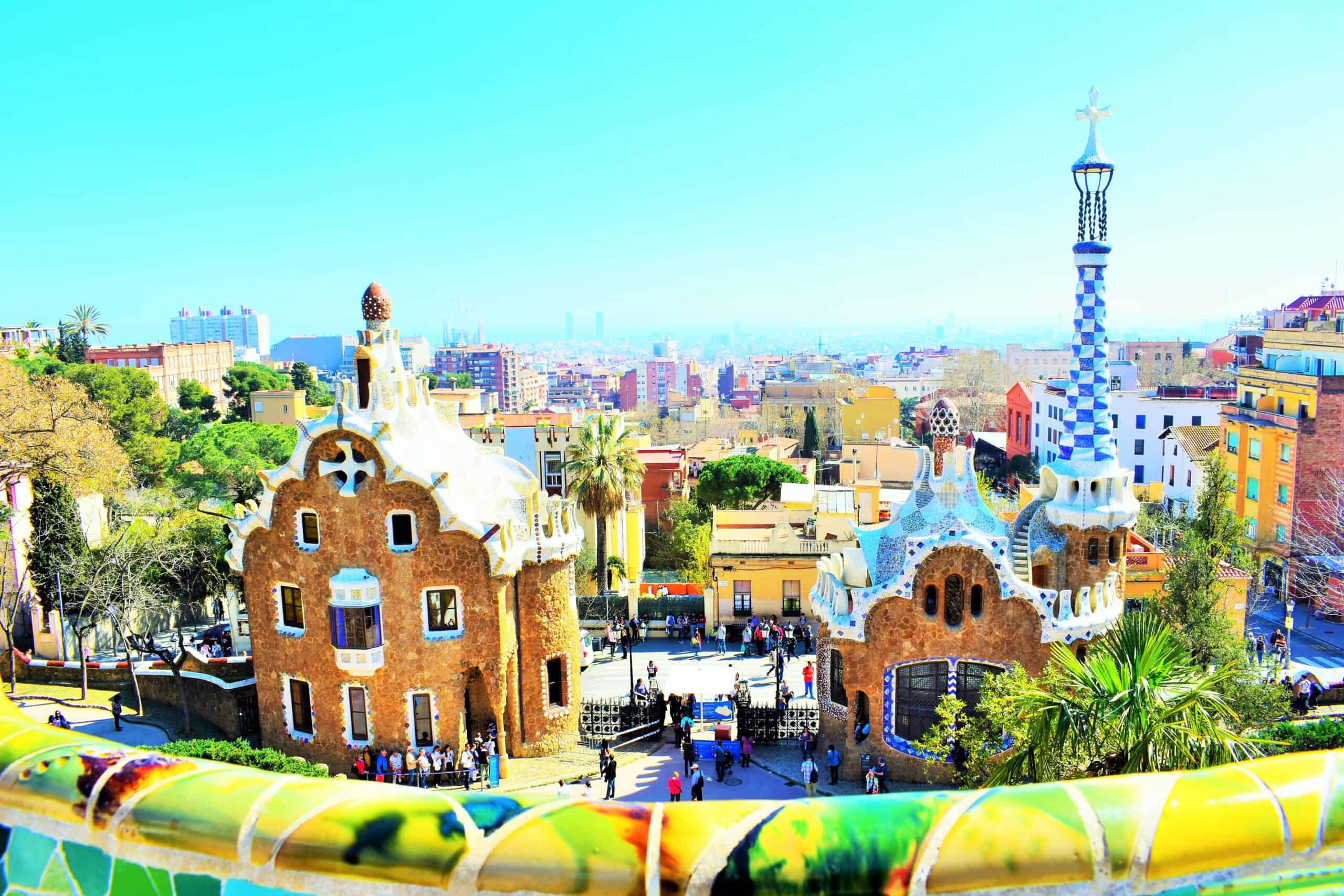
- Park Güell in Barcelona, Spain: €10
- Sintra Castle in Sintra, Portugal: €10
- Belfry Tower in Bruges, Belgium: €12
- Casemates du Bock in Luxembourg City, Luxembourg: €6
Other Expenses
Unfortunately, things happen when traveling. Take into account that pickpocketing, scams, petty theft, and losing items are all possible when taking part in any of the above backpacking Europe routes for 2 weeks.
Budget for upwards of €200 in losses over the course of a 2-week trip. Keep in mind that you may not have anything happen, but if your phone gets stolen or you miss your flight, you’ll be happy you at the very least budgeted for the loss.
To help reduce your risk of needing to use this budget, avoid:
- Street Games
- Exchanging Currency on the Street
- Using Streetside ATMs
- Taking Taxis
- Leaving Your Belongings Unattended
- Walking Home Alone (especially at night)
- Flashing Your Valuables in Public Spaces (wallet, jewelry, etc.)
How to Backpack Europe for 2 Weeks on a Budget

The first time I backpacked across 4 countries in Europe I was only 20 years old and in college, so, I know what you mean by being on a budget!
From my experiences, I have a few really great tips for following my backpacking Europe routes for 2 weeks on a budget.
✅ First, you’re going to have to eat food from supermarkets, street carts, and food stands.
Sit-down restaurants can cost you upwards of 25 euros per person or more in Europe, so instead just enjoy the delicious food being whipped up right outside.
✅ Also, bring your own reusable water bottle.
Beer and wine are far cheaper than bottled water in Europe, so when it’s time to hydrate, you’ll be spending nearly 3-4 euros per small bottle.
I always use my LifeStraw Bottle since it has a 2-step filtering process and I’ve used it all over the world and have never had any issues drinking tap and even stream water.
✅ Look for budget accommodations.
Airbnb’s, budget hotels, or even hostels can be great options. Just be sure to do some research first and ensure you pick a safe hostel in a safe part of town if that’s the route you choose to go.
✅ Walking, bike rentals, and the metro will be your new best friend.
Taxis and cabs are super expensive (and dangerous at times), so opt to take a more eco-friendly approach to get around. It’s cheap and it’s better for you and our planet!
✅ When getting between countries, compare flight and train prices.
Trains are most often cheaper, but can sometimes take far longer than a plane. Compare your options and see what fits best for your itinerary.
✅ Pro Tip: I prefer to travel on the Eurail since it’s always scenic, affordable, easy-to-use, and comfortable. I highly recommend buying a multi-country or multi-week pass if you plan on getting around primarily by train!
It will save you a ton of money in comparison to buying individual tickets, especially if you’re keeping your itinerary flexible.
Unique Experiences to Have in Europe

Whether this is your first visit to Europe or your 10th, there are seemingly endless experiences that can be had on this beautiful and diverse continent!
Hiking and Mountaineering
Everything from summer to winter hiking on the tallest mountain in the Alps (Mont Blanc), rock climbing, rappelling, cave exploring, and more is available to adventure seekers looking to hit the ground running.
Surfing and Water Sports
Surfing, snorkeling, jet-skiing, windsurfing, boating, fishing, sunbathing – you get it.
From the French Riviera to Italy’s Cinque de Terre, there is no end in sight to what you can do on the water in Europe!
Paragliding and Skydiving
We actually went paragliding on our second backpacking trip through Europe when we were in the southeast of France, and it was easily one of the best experiences of our lives!
You also have the option of going skydiving or even riding in a bush plane or taking a helicopter tour through the Alps.
Winter Sports
When it comes to winter sports, there really is no shortage in Europe. Skiing, snowboarding, ice climbing, ice fishing, snowshoeing, and hiking!
You can also opt to enjoy your time in one of the thousands of unique spa retreats scattered across the region if that’s more your style.
What to Eat in Europe

As I previously mentioned, if you’re looking to stay on somewhat of a budget you’ll need to primarily eat at street carts and food stands. This is, however, far from a bad thing!
The street food in Europe is some of the best I’ve ever had in my life. From bratwurst and French fries in Germany to homemade spaetzle and sauerkraut in Prague and delicate crepes in France, there is no end to the amazing food to try in Europe on a budget!
Or, if you’re not on much of a budget and are hoping to find the best foods in every country, these street foods should also be on your list.
Below is a list of some of our favorite street foods and where to try them if you plan on choosing one of our backpacking Europe routes for 2 weeks!
- Doner Kebab – Anywhere
- Sweet or Savory Crepes – France
- Curry Schnitzel Cone – Germany
- Beef Stew – Budapest
- Bratwurst with Mustard, Peppers, and Onions – Prague
- Mulled Wine – Christmas Markets, anywhere
- Pastel de Nata – Portugal
- Steet Tapas – Spain
- Stroopwafels and Bitterballen – Amsterdam
- Chocolate and Waffles – Belgium
- Trdelník – Prague
- Pizza – Naples, Italy
- English Yorkshire – London
Travel Insurance for Europe

If you have plans to follow any of the above backpacking Europe routes for 2 weeks, you should definitely be buying travel insurance. While I don’t want to scare you or make you think that backpacking isn’t a safe idea, there are endless possibilities for things that could go wrong.
👉 Pickpockets, lost luggage, travel delays and cancelations, or worse… injuries, are all possible. We always use SafetyWing since it’s ridiculously affordable (like $42 per month of travel per person) and it covers practically everything.
We have also heard of other travelers being happy with the service from World Nomads, but we haven’t used them so we can’t vouch for them personally.
How to Stay Safe in Europe

Backpacking Europe makes up some of my favorite travel experiences to date, and I am notorious for oversharing my fond memories with practically strangers.
But, there are a few things you should know before you jump on a plane, train, or ferry over to Europe to keep you safe. Just like anywhere in the world, Europe is a very safe region but there are things you should be aware of and look out for.
👉 Before you depart, be sure to download my free safety guide for Europe below!
✅ For example, avoid street games at all costs.
This is a classic “local scams the tourist” scenario, so don’t give anybody on the street your money or show them your wallet.
✅ Also, avoid using streetside ATMs!
Many of them have a plastic covering over the card reader that you won’t be able to see that will steal all of your credit card information. This is especially true in Prague. Only ever exchange or withdraw money at a local bank or at an ATM behind a locked door with cameras.
✅ Don’t let your guard down with all of your belongings on you just so you can get a selfie.
Never make your way through a new city with all of your belongings unless you are en route to your accommodation.
✅ Save all of your sightseeing until you can get your bags to safety.
When you have your bags on your person, look confident and maintain a steady pace to your hotel or dorm room. Otherwise, you become a very easy target for pickpockets and scam artists.
✅ Furthermore, try to avoid walking alone at night.
If you are strictly traveling solo, only walk through well-lit and densely-populated areas after dark. Avoid residential neighborhoods and “shortcuts.”
✅ If you would prefer to get a ride, have a bartender or your hotel order you a taxi.
Generally, they will be using reputable companies, but don’t get in if there is already someone inside.
✅ If you must take a taxi on the street, always pull up the directions before getting in and show the driver. Also, ask the driver how much the ride will cost before they start driving.
Otherwise, you could get scammed out of a lot of money. A friend of mine got scammed for $100 for a couple-mile-long taxi ride in Europe, so take my advice on this!
✅ Avoid taking any drinks from people at bars or clubs that you didn’t see get made or opened. If you leave your drink unattended for any amount of time, buy a new one.
Date rape drugs are quite common across Europe, sadly.
✅ Lastly, pickpocketing is very common in Europe, unfortunately.
Do your best to keep your belongings zipped up and on the front of your person. Never leave any bags hanging on the back of your chair or your phone or wallet on a table, etc.
FAQ
When is the Best Time to Visit Europe?

Europe’s climate varies vastly across the continent. From the snowy Pyrenees in Spain to the crystal clear waters of the Mediterranean in Greece, you could come across all four seasons no matter what time of the year you visit.
Most backpackers are trying to travel on a budget, so if you’re in the same boat, then the best time to visit Europe is in the spring or the fall!
The spring months of March through May and the fall months of late September through November provide great deals on flights, trains, accommodations, tours, and even food prices.
You’ll also get to experience everything with far fewer tourists so you’ll have more opportunities to connect better with the locals and get more of an inside look at what life is actually like for them.
This is by far my favorite time to go backpacking in Europe. However, since you will be backpacking across Europe, there are a few things to keep in mind. While the winters provide an escape from many of the tourist crowds and you can often find extremely affordable accommodations, you’ll need to carry all of your winter gear on your back.
This means winter coats, boots, hats, scarves, gloves, wool socks, and everything in between. This is a lot of weight to carry and trudging through the snow for miles will be extremely exhausting.
So, if you really want to visit Europe in the winter, consider only visiting one or two countries to save on traveling with all of those heavy items.
If you prefer to visit Europe during the peak season (summer months of June through mid-September), then you’ll usually get great weather. But, be prepared for expensive accommodations, food, tours, and travel methods as well as tens of thousands of tourists and long wait times everywhere you go.
In my opinion, visit Europe during the shoulder seasons for the best experiences!
What are the Best Countries to Go Backpacking in Europe?

Europe is home to over 40 different countries so choosing which ones to backpack through can be overwhelming! If you’re feeling like you aren’t sure where to begin, then keep reading.
If you enjoy backpacking but want to be in close proximity to stunning beaches, then Greece, Italy, Croatia, Portugal, and Spain are the top of the line.
If you want to backpack through the mountains, then northern Spain, France, Switzerland, northern Italy, and Austria make for fantastic destinations.
If you enjoy city life and want to train travel across the continent, then Germany, Poland, Czechia, the United Kingdom, and Denmark should be on your list.
If you want to make your way through medieval villages and across ancient canals via stone bridges, then Belgium, the Netherlands, and Luxembourg are some of the finest countries to visit in Europe.
The best part about visiting countries in Europe is many of them are extremely diverse so you can find mountains, beaches, city life, and medieval villages all in one! Take France, for example. It’s home to luxurious wine vineyards, medieval castles, the great Alps, and the French Riviera.
If this is one of your very first backpacking trips, then I suggest looking into visiting just one or two countries that will provide you with a great range of activities. Then, once you are comfortable getting around Europe, start planning slightly more complex itineraries.
So, what are the best countries to go backpacking in Europe? Coming from an avid backpacker, I believe it depends mostly on your interests, but also on how comfortable you are getting around.
I personally love backpacking through France, Spain, Portugal, Luxembourg, the Netherlands, Czechia, Belgium, and Germany. However, this may change for you.

Europe is full of everything from enchanting castles and medieval villages to white-sand beaches and snowy mountain tops as well as sophisticated cities and small, romantic towns.
With so much to do and see on one of the most diverse continents in the world, it can be challenging to decide where to go!
That’s why I have created these diverse backpacking Europe routes for 2 weeks that cover every region of Europe! Use them to help you plan your ultimate European journey with all of the sights, activities, and food of your wildest dreams.
I hope this post comes in handy when planning your next backpacking trip to Europe and you have the experience of a lifetime!
